
How to Evaluate Water-Based Blocked Polyisocyanates for PUD Formulations: Compatibility, Viscosity, pH and Bake Window
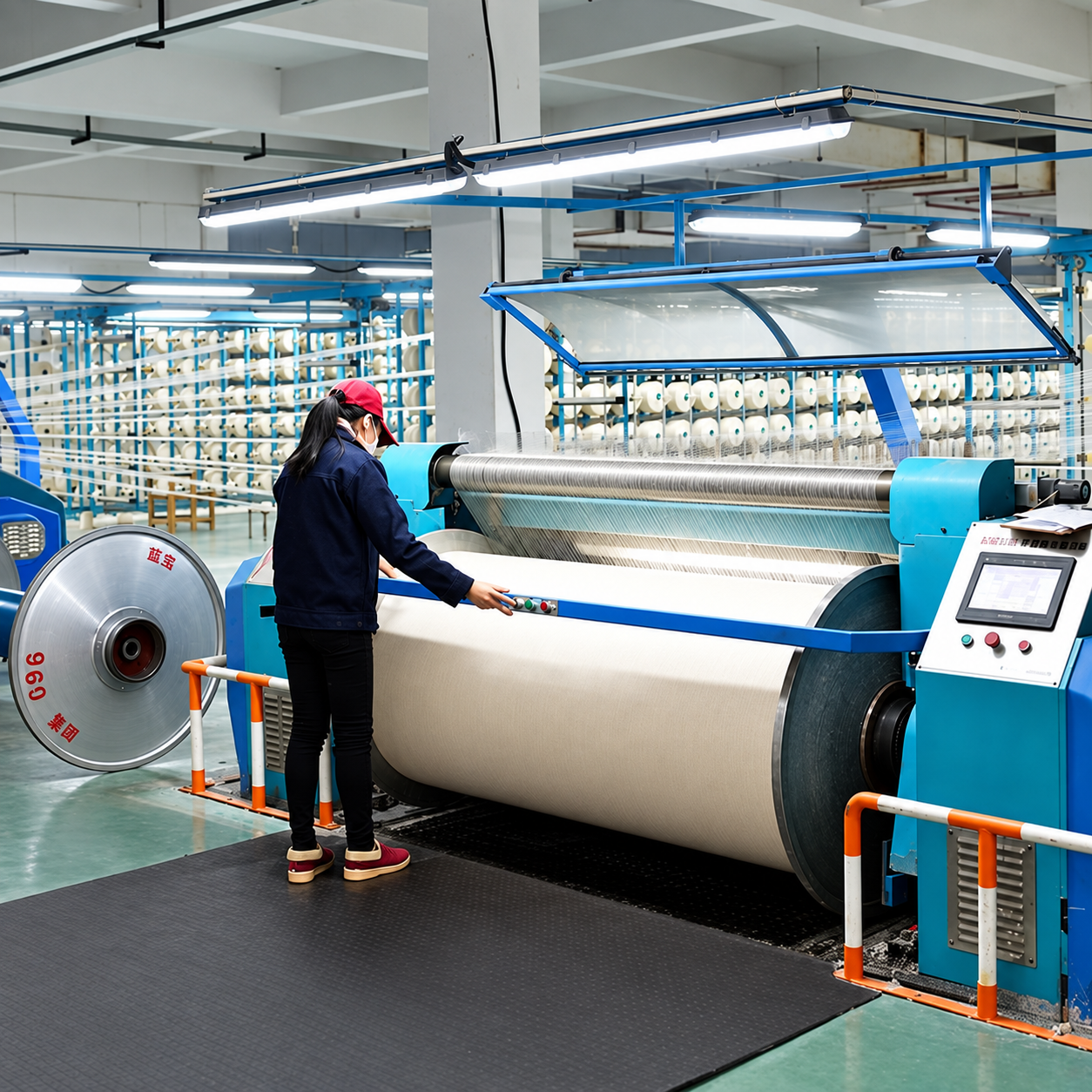
How to Evaluate Water-Based Blocked Polyisocyanates for PUD Formulations: Compatibility, Viscosity, pH and Bake Window
Updated: 2026
A blocked crosslinker can look suitable on a TDS and still behave differently once it enters a real polyurethane dispersion. The reason is simple: the crosslinker is not working alone. It is being added to an aqueous polymer dispersion that already has its own ionic stabilization, pH, viscosity, surfactants, co-solvents, additives and processing history.
For formulators, this changes the question from “Does this product have the right headline specifications?” to “Will this crosslinker remain stable, processable and reactive inside my actual PUD system?”
If you first need a broader explanation of PUD, waterbased polyisocyanates and blocked isocyanates, read our PUD and crosslinker selection guide. This article goes one step deeper and focuses only on how to evaluate a water-based blocked crosslinker inside a PUD formulation.
Request TDS Request Sample Request Quotation Ask for a Suitable Grade
Why can a blocked crosslinker look right on paper but fail in a PUD?
Water-based blocked polyisocyanates are latent crosslinkers: the blocked isocyanate functionality is designed to remain comparatively inactive during storage and become reactive after sufficient heat input. That makes them useful when a formulation needs a one-component storage stage followed by heat curing.
But the blocked-isocyanate chemistry is only one part of the selection problem. In a PUD system, the crosslinker also has to disperse or dissolve into the aqueous formulation without creating instability that makes production, storage or application unreliable.
This is why two products with similar solids or activation direction can still behave differently in the same resin. Ionic form, carrier, viscosity, pH response, dilution behavior and the resin's own stabilization package all affect what the formulator sees before the coating ever reaches the oven.
Which variables should you screen first?
The most useful first-pass screen is not a list of “best” specifications. It is a decision matrix that connects each specification to a formulation risk and a test action.
| Screening variable | Why it matters | Buyer question | What to test before approval |
|---|---|---|---|
| Ionic compatibility | The PUD and crosslinker can use different stabilization approaches. | Does the crosslinker remain compatible with this specific PUD and additive package? | Mixing behavior, dispersion stability, visible separation and viscosity change after addition. |
| Viscosity | It affects pumping, mixing, coating behavior and how easily the crosslinker distributes through the formulation. | Are the supplier values comparable, and what happens after the crosslinker enters the formula? | Measure under matched temperature/method conditions and track formulation viscosity after addition. |
| pH | Waterborne dispersion stability can be sensitive to the formulation environment. | Does the system remain stable at the working pH, not just the as-supplied pH? | Record initial pH, post-addition pH and pH drift at defined formulation checkpoints. |
| Dilution stability | Water dilution changes concentration and can change the balance among resin, crosslinker and auxiliaries. | Does the diluted formulation stay uniform at the planned dilution ratio? | Test the real dilution sequence, water quality, additive order and visible stability. |
| Storage stability | A 1K system has to remain usable before the bake step. | Does the prepared formulation remain consistent through the required storage/use cycle? | Track phase behavior, viscosity, pH and application consistency at agreed storage checkpoints. |
| Actual bake / cure window | Oven setpoint is not the same as the thermal history of the coated substrate. | Does the coated part receive enough temperature and dwell time to activate the system? | Run a bake ladder using actual substrate temperature and dwell time, then evaluate the film. |
| End-use validation | A stable formulation is not automatically a suitable finished system. | Does the cured film meet the application's real performance requirements? | Select relevant film or textile tests such as adhesion, appearance, flexibility, water resistance or wash durability where applicable. |
Decision rule: treat a TDS value as a screening coordinate, not as proof of formulation fit. The grade should move forward only when the formulation-level behavior and the process window are both acceptable.
How should ionic compatibility be evaluated?
Anionic, cationic and nonionic descriptions are useful because they tell you something about how an aqueous material is stabilized. They are not, by themselves, a compatibility guarantee.
For a PUD formulator, the practical sequence is to identify the PUD's ionic or stabilization type, confirm the crosslinker's form, then test the complete formulation. The final system may also contain surfactants, thickeners, pigments, coalescents, defoamers or other additives that change the compatibility picture.
That is why “same ionic type” should be treated as a reasonable screening clue rather than a pass/fail certificate. If the PUD supplier describes the resin as anionic, nonionic or cationic, include that information when asking a crosslinker supplier for a candidate direction.
Why do viscosity and pH need formulation-level testing?
Viscosity: compare like with like
Viscosity figures are only directly useful when the test temperature and method are comparable. A number measured under one condition should not be ranked against another number measured under a different condition as if they were directly comparable.
More importantly, the formulator should measure what happens after addition. A low-viscosity crosslinker can still cause a large formulation change if the resin-crosslinker-additive combination is not compatible. The useful observation is therefore not only the supplier's incoming viscosity but also the direction and stability of viscosity change in the real formula.
pH: the working system matters more than the isolated number
As-supplied pH is useful for initial screening, but a broad or narrow supplier pH range does not prove PUD compatibility. Check the formulation before and after crosslinker addition, then monitor the system at the same checkpoints used for your storage and processing evaluation.
Unexpected pH movement, thickening, separation, sediment or loss of application consistency is a reason to stop and investigate the system before moving to larger-scale trials.

What does water dilution actually tell you?
“Water-dilutable” or “water-dispersible” does not automatically mean “stable at every dilution ratio in every PUD.” Dilution changes concentration, ionic balance and the relative level of additives. Addition order and water quality can also matter in sensitive systems.
Use the dilution ratio and mixing sequence that your production process will actually use. Then check whether the formulation remains uniform and whether viscosity or pH drifts in a way that affects coating behavior.
If the formulation will be held before coating, storage stability should be evaluated on the prepared formulation, not inferred from the shelf life of the crosslinker by itself.
Why should the bake window be based on the substrate, not just the oven setpoint?
A blocked isocyanate is selected partly by its activation direction, but a nominal deblocking temperature is not a complete cure schedule. In production, the coated substrate has its own heat-up profile. Line speed, substrate thickness, coating weight and oven configuration can all affect the temperature-time history seen by the film.
A practical screening program therefore uses a bake ladder around the intended process window and records the actual substrate condition as closely as possible. The objective is not simply to prove that the oven reaches a number; it is to find a window in which the cured film is repeatable without pushing the process beyond the line's normal operating range.
This is also why a candidate crosslinker should not be treated as a same-formulation substitute based only on a similar nominal activation temperature. Same-condition formulation and bake validation still have to be done.
What changes when the application is textile or fabric?
Textile and fabric systems add another layer to the decision because the coating or finish has to survive a flexible substrate and the downstream process. The first gate is still formulation compatibility, but the final validation should use application-specific endpoints rather than a generic hard-film test package.
Depending on the textile end use, relevant checks may include coating appearance, adhesion to the treated substrate, flexibility or hand-feel impact, water resistance, and wash durability. These are test targets, not assumed benefits of a particular Dongsen grade.
For application context and related raw-material directions, see Dongsen's Textile & Fabric application page. The crosslinker still needs to be screened against the buyer's actual resin and finishing process.

What should you test next before approving a crosslinker?
A useful qualification sequence moves from formulation stability to process fit and then to end-use performance:
| Stage | What to define | Decision to make |
|---|---|---|
| 1. Baseline PUD | Resin/PUD type, ionic or stabilization type, solids, pH, viscosity, functional group information and key additives. | Is the formulation context sufficiently defined to choose a crosslinker direction? |
| 2. Mixing screen | Addition order, dilution ratio, mixing conditions, immediate appearance, viscosity and pH response. | Does the formulation stay uniform and processable after addition? |
| 3. Storage screen | Planned holding/storage conditions and checkpoints relevant to production. | Does the prepared 1K system remain consistent through the required use cycle? |
| 4. Bake ladder | Actual substrate temperature, dwell time and line constraints. | Is there a repeatable cure window inside the real process? |
| 5. End-use validation | Application-specific film or textile requirements. | Does the cured system meet the buyer's own acceptance criteria? |
Open variables that cannot be solved from a TDS alone
- Your PUD's exact stabilization / ionic character and additive package.
- Your real dilution ratio, addition order and required prepared-formulation storage window.
- Your actual coated-substrate temperature and dwell time on the production line.
Those variables are the reason sample testing remains necessary. If you send them with the inquiry, the supplier can narrow the candidate direction before you spend time on full film testing.
How should Dongsen’s water-based blocked polyisocyanate family be used in this decision?
Dongsen supplies water-based blocked polyisocyanate crosslinkers in water-dispersible and water-soluble directions. The correct starting point should be selected from the buyer's formulation and bake requirements, not from a claim that one grade is universally compatible with PUD.
For this reason, Dongsen recommends a family-level screening step first: identify the PUD type, ionic/stabilization information, target solids and viscosity behavior, planned dilution, storage requirement, and actual bake window. An exact grade should be confirmed only after the relevant product data and compatibility test plan are matched to the formulation.
For the broader buyer-problem route, see the Waterborne Compatibility Solution.
Key takeaways
- A water-based blocked crosslinker should be selected as part of a PUD system, not by one specification in isolation.
- Ionic type, viscosity, pH, dilution stability, storage stability and the actual bake window form a practical first-pass screening set.
- Supplier viscosity data should be compared only under comparable test conditions, then verified again inside the real formulation.
- Water dilution and as-supplied pH do not prove compatibility with a specific PUD.
- For textile and fabric systems, add application-specific validation after formulation and bake-window screening.
FAQ: Screening water-based blocked polyisocyanates for PUD
Is lower viscosity always better for a PUD formulation?
No. Lower incoming viscosity can make handling easier, but it does not prove better compatibility. Compare viscosity under matched test conditions and then measure the change after the crosslinker enters the actual formulation.
Does matching the ionic type guarantee compatibility?
No. Ionic type is a useful screening variable, but the final formulation contains a resin stabilization package and other additives. Compatibility still needs to be checked in the complete system.
Can the supplier’s pH range tell me whether the crosslinker will work with my PUD?
Not by itself. Use the supplier pH information as an initial screen, then measure the working formulation before and after addition and through the required storage or processing checkpoints.
If a blocked polyisocyanate can be diluted with water, is the diluted mixture automatically storage-stable?
No. Test the planned dilution ratio, addition sequence and prepared-formulation storage cycle. Water dilution changes the formulation environment and may change viscosity or dispersion stability.
Is deblocking temperature the same as my oven setpoint?
No. A nominal activation or deblocking temperature is not a complete production cure schedule. Evaluate the actual coated-substrate temperature and dwell time, then confirm the film through a bake ladder.
What information should I send Dongsen for a PUD compatibility screen?
Send the PUD/resin type, ionic or stabilization information if available, solids, pH, viscosity, planned dilution ratio and addition sequence, required storage/use window, actual bake temperature-time conditions, textile or coating end use, and the final properties you need to test.
Need to screen a water-based blocked crosslinker for your PUD?
Send the formulation context before asking for an exact grade. The most useful starting information is your PUD type, ionic/stabilization direction, solids, pH, viscosity, dilution plan, storage requirement, actual bake window and end-use test requirements.
Request TDS Request Sample Request Quotation Go to Inquiry Form
Request TDS, Sample or Formulation Screening
Share the details that control compatibility so we can narrow the test direction:
- ✓ PUD / resin type and ionic or stabilization information
- ✓ Solids, pH and viscosity
- ✓ Dilution ratio, water quality and addition sequence
- ✓ Required prepared-formulation storage / use window
- ✓ Actual bake temperature-time window and textile or coating end use