
2K Waterborne PU Pot Life: How to Define the Real Processing Window

Updated: 2026
Quick Answer: The practical pot life of a 2K waterborne polyurethane coating is the usable period after mixing in which the formulation still meets agreed application and final-film criteria. Pot life is not necessarily gel time: a mixture may remain fluid with little viscosity change after its useful processing window has ended. Define the window by the actual resin, mixing, temperature, application, and cure conditions.
Dongsen supplies raw-material water-dispersible polyisocyanate crosslinkers. The crosslinker is one formulation variable; the customer's complete system determines the final working window.
Why Is Pot Life More Than the Time Before Gelation?
In a conventional two-component system, formulators often watch viscosity because chemical reaction gradually makes the mixture thicker. Eventually, the material becomes too viscous or gels and can no longer be applied.
That simple visual model can be misleading in a 2K waterborne polyurethane system.
After a water-dispersible polyisocyanate is added to a hydroxyl-functional waterborne resin, dispersion and reactions involving resin hydroxyl groups and water can develop together. Evaporation and film formation become additional factors during application and cure.
Some of that chemistry can progress without producing an obvious increase in bulk viscosity.
A coating may therefore still pour, stir, or spray while no longer delivering the same leveling, transparency, gloss, resistance, or final film quality that it produced immediately after mixing.
This is why "still liquid" should not automatically be interpreted as "still within pot life."
If your coating remains fluid but film quality changes, share the observed failure and your formulation conditions before selecting a crosslinker direction.
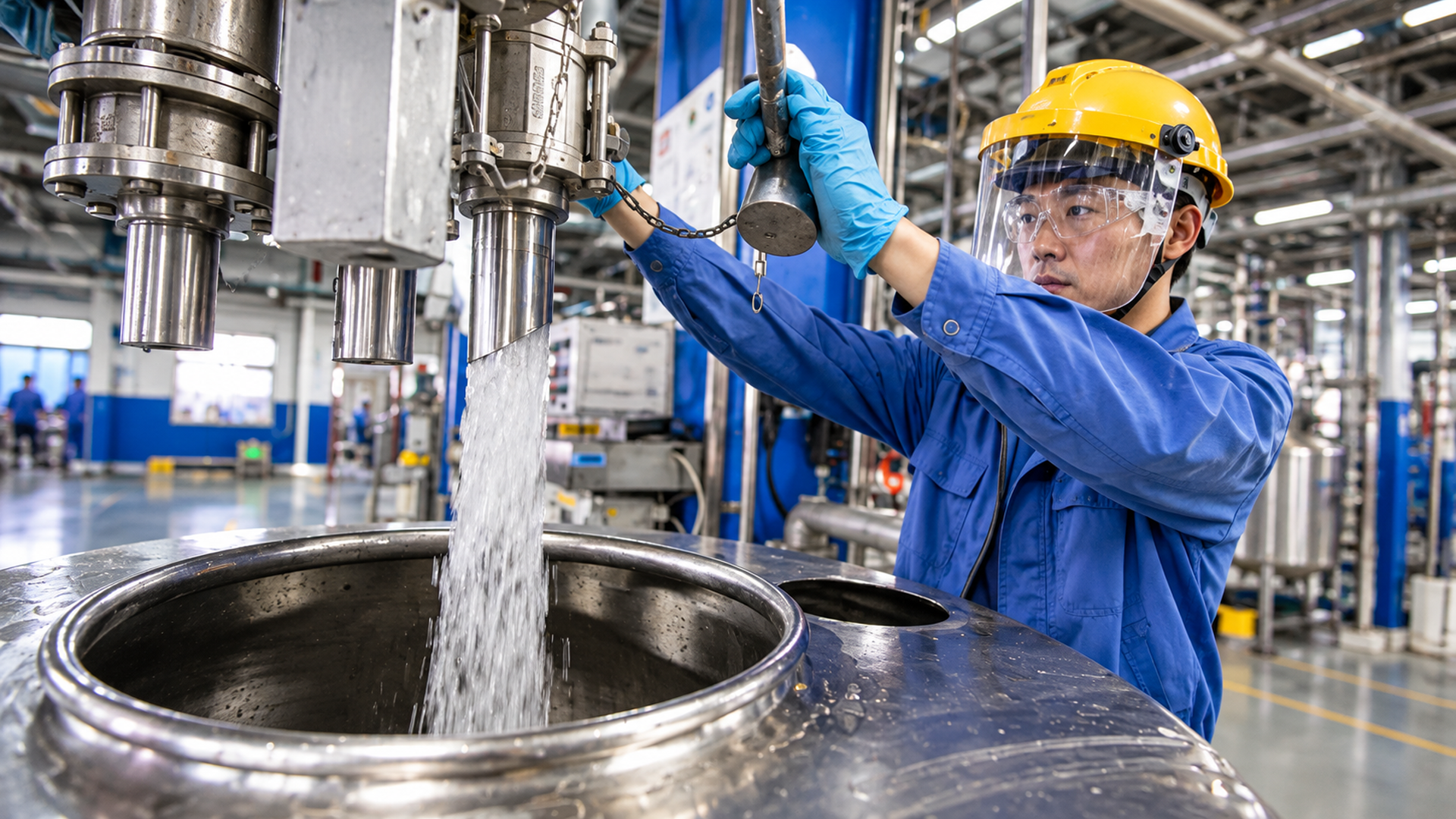
What Is the Difference Between Pot Life, Working Time, and Gel Time?
These terms are often used as if they mean the same thing, but they answer different formulation questions.
| Term | Practical meaning | Why it matters |
|---|---|---|
| Gel time | Time until the mixed system develops obvious gelation or loses fluidity | Useful as a reaction endpoint, but it may occur later than the practical application limit |
| Pot life | Period after mixing during which the material remains suitable according to defined acceptance criteria | Must be tied to the actual formulation and test method |
| Working / processing window | Time after mixing during which material can be transferred and applied, with acceptable leveling and cured-film results under the specified process | Usually the most useful production definition |
For a production line, the processing window may be shorter than the observed gel time.
For example, if the mixture remains fluid for several hours but panels sprayed later develop unacceptable haze or lower final resistance, the useful pot life should end when that failure begins—not when the material finally gels.
Why Can Viscosity Stay Stable While the Processing Window Changes?
A waterborne 2K PU formulation is not simply a homogeneous solvent solution.
The water phase, resin dispersion, and dispersed polyisocyanate phase interact while reactions develop. Changes within this dispersed system do not necessarily track bulk viscosity, so a formulator may not see the dramatic thickening expected from a homogeneous reactive mixture.
That creates an important troubleshooting risk:
Viscosity can be one pot-life indicator, but it should not automatically be the only pass/fail criterion.
A better evaluation combines mixed-system stability + application behavior + cured-film performance.
If viscosity remains nearly unchanged but the coating begins to show poorer leveling, haze, particles, reduced gloss, blistering tendency, or weaker resistance after application, the formulation may already be outside its useful processing window.
Which Variables Control the Pot Life of a 2K Waterborne PU System?
There is no universal pot-life number for a waterborne polyisocyanate.
The result belongs to the complete formulation, not to the hardener alone.
1. Resin chemistry and hydroxyl availability
The binder determines how many reactive groups are available and how easily the crosslinking reaction can proceed.
Two hydroxyl-functional waterborne resins can therefore behave differently with the same crosslinker.
Resin type, OH value, solids, particle design, ionic character, pH, and co-solvent package should all be considered when comparing processing windows.
2. NCO/OH balance and crosslinker addition
Crosslinker level changes the number of reactive NCO groups introduced into the system.
Changing the ratio can therefore affect cure development and the mixed-system behavior.
A higher crosslinker addition should not automatically be treated as "better curing," and a lower addition should not automatically be used simply to obtain more working time.
The formulation needs to meet both the processing requirement and the final-film requirement.
3. Crosslinker hydrophilicity and dispersion behavior
A water-dispersible polyisocyanate still needs to distribute properly through the resin phase.
Poor dispersion may create particles, haze, local reaction differences, or unstable application behavior.
This is one reason why crosslinker selection cannot be based on NCO content alone.
4. Mixing order and mixing energy
Mixing is part of the formulation.
The order in which hardener, water, co-solvent, and resin are combined can influence dispersion quality. Mixing time and shear also matter.
If two laboratories use different mixing procedures, their measured pot-life results may not be directly comparable even when the ingredients are identical.
5. Temperature
Temperature affects both reaction rate and application behavior.
A formulation screened in a cool laboratory should not automatically be assumed to have the same processing window on a warmer production floor.
Pot-life testing should therefore reflect the temperature range in which the mixed coating will actually be used.
6. pH, water, and co-solvent package
Waterborne systems rely on a balance between resin stability, crosslinker dispersion, evaporation, and cure.
Changing dilution water, pH, or co-solvent can change that balance.
Adding more water simply because a mixture becomes difficult to process is therefore not a universal pot-life solution. It changes the formulation and needs to be validated as such.
7. Pigments, fillers, and additives
A clear coating and a pigmented coating can show different behavior even when the binder and crosslinker are nominally the same.
Pigments, fillers, defoamers, wetting agents, thickeners, and other formulation components can influence viscosity, dispersion, application, and film appearance.
That is why pot life established in a clear laboratory model should not automatically be transferred to a white or heavily pigmented production coating.
Evaluate clear and pigmented formulations separately, and treat any change in crosslinker blend as a formulation change. A processing window measured in one resin system, at one temperature, cannot establish a universal blend ratio, dosage, or guaranteed working time.
How Do You Know When the Real Processing Window Has Ended?
Instead of waiting for gelation, define observable acceptance criteria before the test begins.
A practical screening matrix can look like this:
| What you observe | First variable to investigate | Useful validation | Do not assume |
|---|---|---|---|
| Rapid viscosity rise | Temperature, NCO/OH, reactivity, catalyst or formulation balance | Time-series viscosity under actual process temperature | The crosslinker is automatically unsuitable |
| Viscosity looks normal but sprayability worsens | Processing-window change, dispersion, rheology | Spray or drawdown panels at different aging times | Fluid material is automatically still usable |
| Haze or particles develop with time | Crosslinker/resin compatibility, dispersion, mixing, pH, co-solvent | Observe mixed system and cured films at controlled intervals | More crosslinker will solve compatibility |
| Leveling or gloss falls on later panels | Aging mixed formulation, application viscosity, surface development | Keep substrate, film build and cure constant while changing only mixture age | Gel time defines the usable window |
| Film resistance declines even though application appears normal | Cure development after extended mixture age | Compare cured-film tests from fresh and aged mixtures | Appearance alone proves technical pass |
| Bubbles or blistering increase | Water interaction, air entrainment, wet-film condition, late application | Repeat under controlled mixing, flash-off and cure conditions | A single visual defect identifies one root cause |
| Long pot life but cure becomes too slow | Reactivity, formulation balance, cure condition | Compare working window and final cure separately | Longest pot life is automatically the best choice |
Screenshot this matrix before starting crosslinker screening.
The useful principle is:
The practical endpoint is the earliest observed failure of a predefined application or final-film criterion, even if the mixture remains fluid.
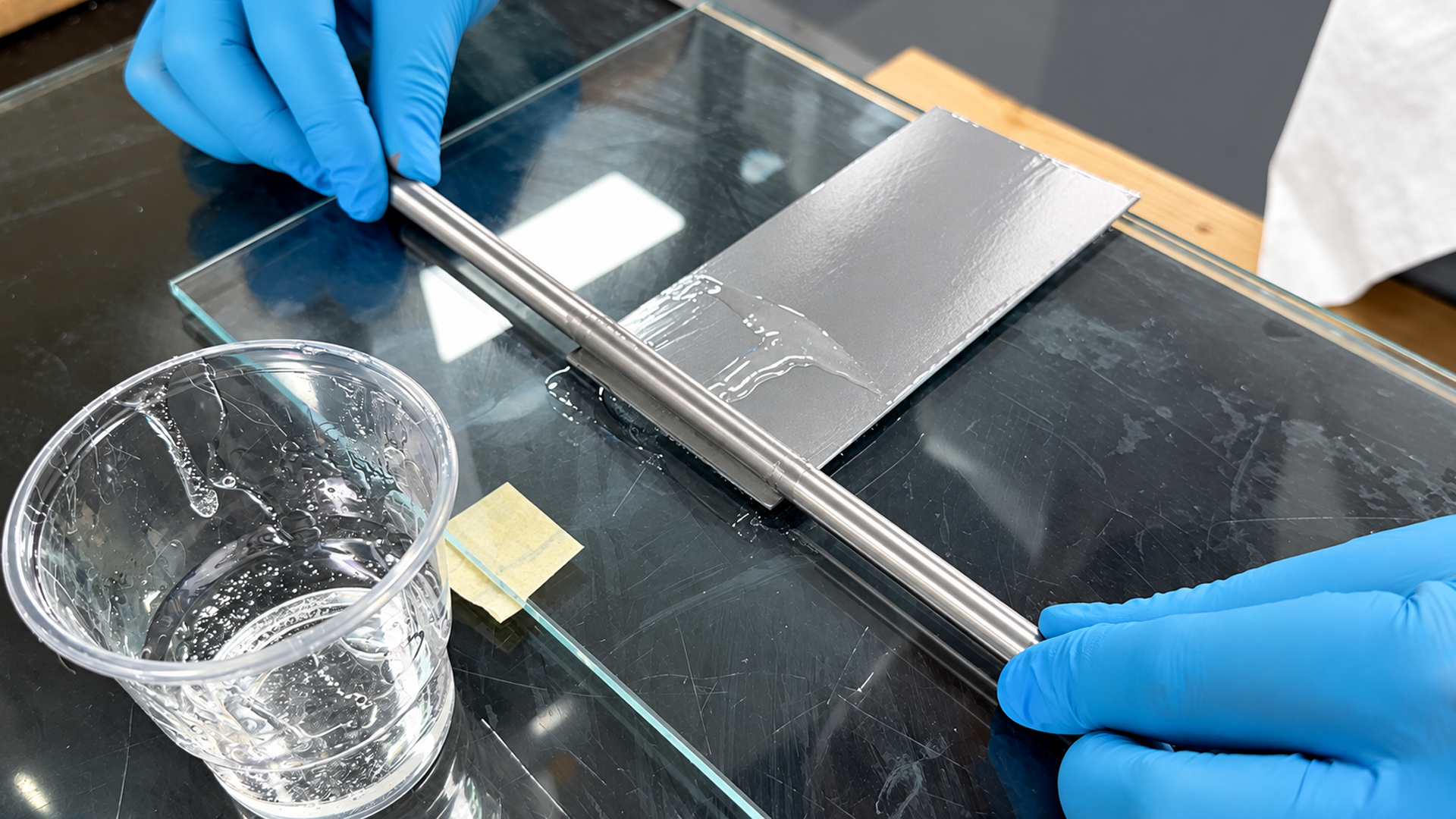
Does a Longer Pot Life Always Mean a Better Crosslinker?
No.
A longer processing window can be useful for large batch sizes, manual mixing, complex spray operations, slow production lines, or applications where the coating needs to remain usable for several hours.
But pot life is only one decision variable.
The same formulation may also need:
- acceptable dispersion;
- practical mixing;
- required dry speed;
- complete cure;
- target gloss or appearance;
- water and chemical resistance;
- hardness or flexibility;
- adhesion;
- acceptable film defects.
A crosslinker that produces the longest apparent working time is not automatically the correct crosslinker if the final coating misses the required cure or performance target.
Selection should therefore be based on a processing-window / cure / final-performance balance, not one isolated number.
How Should a Formulator Measure Pot Life More Reliably?
A useful test should reproduce the customer's actual production logic as closely as possible. Define the acceptance criteria first, then compare results at selected mixture ages.
ISO 9514 provides a framework for preparing and conditioning multicomponent coating samples and assessing pot life through selected properties. A production-oriented screening plan must also reflect the customer's actual conditions; the outline below does not establish compliance with that standard.
Step 1 — Fix the formulation
Do not change the resin, crosslinker level, water, co-solvent, additives, or pigment package during the same pot-life series.
Record the exact batch.
Step 2 — Fix the mixing method
Record:
- mixing order;
- mixing time;
- mixing speed or method;
- initial temperature;
- batch size.
If these variables change, the result is no longer a clean time comparison.
Step 3 — Define application intervals
Choose intervals that match the expected production window.
A short-cycle system may need close early measurements. A longer-working formulation may require samples across several hours.
The correct intervals depend on the production process; there is no universal schedule.
Step 4 — Track the mixed material
At each interval, record relevant indicators such as:
- appearance;
- clarity or haze;
- particles or separation;
- viscosity;
- mixing condition;
- foam;
- obvious gelation.
These observations describe the material in the container.
They do not yet prove that the coating is still usable.
Step 5 — Apply a panel at every interval
Use the same substrate, application method, film thickness, flash-off, and cure condition. Give every panel the same elapsed cure time before comparing film tests.
This converts pot-life testing from a container observation into a real coating test.
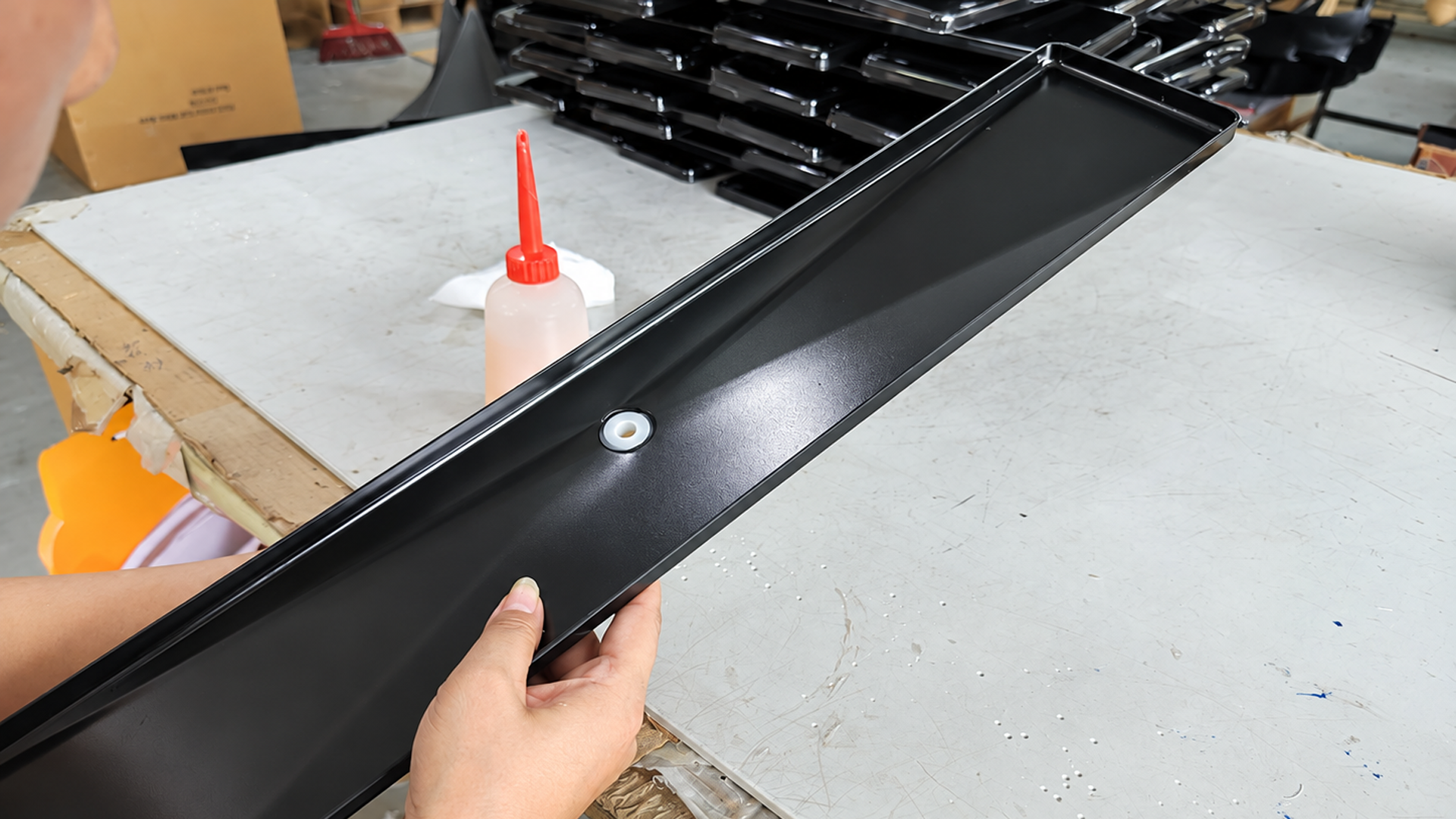
Step 6 — Evaluate application quality
Compare:
- sprayability or coating behavior;
- leveling;
- surface appearance;
- transparency or haze;
- gloss where relevant, using a consistent measurement method such as ASTM D523;
- visible defects.
Step 7 — Evaluate the cured film
Choose tests that match the buyer's real requirement.
Depending on the application, these may include hardness, adhesion, water resistance, alcohol or chemical resistance, blocking, flexibility, or another customer-defined method.
The pot-life endpoint is then based on an actual acceptance criterion. For a relevant solvent-resistance requirement, ASTM D5402 describes a solvent-rub assessment; it does not by itself establish complete cure or every aspect of chemical resistance.
If a failure falls between sampling intervals, report the last passing interval and the first failing interval. Do not claim a more precise endpoint than the sampling supports. Set the production limit with a margin validated for the actual process.
A Better Definition of Pot Life for Production
Instead of writing:
"Pot life: X hours."
a formulation team can define:
"The mixed coating remains within the approved processing window for X hours under the stated formulation, temperature, mixing, application, and cure conditions, based on the agreed application and cured-film criteria."
That definition is longer, but technically more useful.
It tells the production team what X hours actually means. Here, X represents a measured result for the stated formulation and conditions, not a Dongsen hardener guarantee.
It also makes supplier comparison more reliable because two crosslinkers can be tested against the same acceptance standard.
What Should You Compare When Screening Two Waterborne Polyisocyanates?
Do not begin by comparing only:
NCO % → viscosity → price.
Those numbers are useful screening information, but they do not answer whether the candidate will work in your formulation.
A controlled comparison should keep the resin and production conditions constant and examine at least three layers:
Layer 1 — Initial compatibility
Can the crosslinker be incorporated into the resin system without unacceptable particles, haze, separation, or mixing difficulty?
Layer 2 — Processing stability over time
Does the formulation remain sprayable or coatable through the required production period?
Does its appearance, viscosity, dispersion, or application behavior change?
Layer 3 — Final film after mixture aging
Does material applied later in the processing window still meet the agreed cure and performance requirements?
Only after these three layers are acceptable does a pot-life number become commercially meaningful. Keep the target NCO/OH ratio on the same calculation basis; equal hardener mass does not necessarily mean equal NCO addition. Document any formulation adjustment separately.

Why Should Pot Life Be Tested in the Real Resin Instead of the Hardener Alone?
A polyisocyanate datasheet describes the crosslinker.
It does not describe your completed coating.
Once the hardener enters a customer's formulation, the result depends on the resin chemistry, OH functionality, pH, water content, co-solvent, additives, pigments, NCO/OH ratio, temperature, mixing, film build, substrate, and curing process.
For this reason, Dongsen treats grade selection as a screening direction followed by formulation validation, rather than claiming that one water-dispersible polyisocyanate has one universal pot life across all waterborne coatings.
Dongsen's WD-series Waterbased Polyisocyanates can be evaluated as crosslinker candidates for appropriate 2K waterborne systems, but the useful processing window must be confirmed in the customer's actual formulation.
For appropriate 2K waterborne formulations, WD-8980 Waterborne HDI Polyisocyanate Hardener for 2K PU Systems is a candidate for initial crosslinker screening. Its compatibility, processing window and cured-film performance must be evaluated in the actual resin under the intended mixing, temperature, application and cure conditions.
When Is a Pot-Life Problem Actually a Compatibility Problem?
The two issues can overlap, but they are not identical.
If a formulation shows particles, haze, or instability immediately after adding the hardener, the first question may be initial compatibility or dispersion.
If the formulation mixes well initially but develops haze, particles, poor leveling, or application changes after standing, the issue may involve time-dependent mixed-system stability and therefore the processing window.
A practical diagnostic sequence is:
Initial mixing quality → time-dependent stability → application behavior → cured-film performance.
This avoids blaming every late-stage defect on reaction speed alone.
For broader resin and crosslinker selection, see Crosslinker for Waterborne Resins: A Formulator's Guide. For initial dispersion or compatibility problems, follow the Waterborne Compatibility Solution.
What Information Should You Send Before Asking Dongsen for a Crosslinker Direction?
A product code alone is usually not enough.
For a 2K waterborne pot-life or processing-window problem, send the information that controls the decision:
- resin or binder type;
- OH value, if available;
- resin solids;
- formulation pH;
- ionic type, if known;
- co-solvent package;
- current crosslinker and addition level;
- current NCO/OH target, if calculated;
- mixing method and order;
- application method;
- production temperature;
- required working time;
- current failure point;
- cure condition;
- target film tests.
Non-confidential ranges are normally enough to begin screening.
A complete formulation is not required for the first discussion, but better formulation context produces a better crosslinker direction.
What Is the Next Test to Run?
If your current 2K waterborne coating is described only as:
"Pot life is too short"
do not immediately change the hardener.
Run one controlled time-series test first.
Keep the formulation unchanged, apply panels at several realistic production intervals, and compare:
mixed-system condition → application quality → final cured-film result.
That test answers the most important question:
Is the real failure caused by early gelation, compatibility, changing application behavior, or loss of final-film performance?
Once that is known, crosslinker screening can address the actual failure mode. Continue through Dongsen's Pot Life / Processing Window Solution for this buyer-problem route.
Key Takeaways
- 2K waterborne PU pot life should not automatically be defined by gel time.
- A formulation can remain fluid even after its most useful processing window has started to close.
- Viscosity is useful, but application behavior and cured-film performance should also be part of the acceptance criteria.
- Pot life belongs to the complete formulation and process—not to the polyisocyanate datasheet alone.
- Compare crosslinkers under the same resin, mixing, temperature, application, and cure conditions.
- The best crosslinker is not automatically the one with the longest pot life; the goal is a workable processing window plus the required final film.
Need to Extend or Stabilize a 2K Waterborne Processing Window?
Send your resin type, OH value if available, solids, pH, current crosslinker, mixing procedure, production temperature, required working time, and the point at which the coating begins to fail.
Dongsen can help identify a suitable water-dispersible polyisocyanate direction for controlled sample screening.
To discuss a candidate for screening, send your processing-window requirement and test conditions.
Send Your Processing-Window Requirement
Share non-confidential formulation ranges and the conditions that define your required processing window. These details help frame a controlled crosslinker-screening discussion.
- 🧪 Discuss the observed failure and the variables to screen.
- 📄 Request current TDS information for the candidate direction.
- 🔬 Discuss samples for evaluation in your actual resin.
- 📋 Share non-confidential formulation ranges and required film tests.
WhatsApp: +86 15361757135 · Email: marketing@dongsenchem.com
FAQ: 2K Waterborne PU Pot Life
Is pot life the same as gel time?
No. Gel time describes gel formation and loss of flow under a specified test, while practical pot life should describe how long the mixed formulation still meets its agreed processing and final-film requirements.
Can viscosity alone determine the end of pot life in a waterborne 2K PU coating?
Not reliably in every system. Some 2K waterborne formulations can remain relatively fluid while application behavior or cured-film performance has already changed. Viscosity should therefore be combined with application and film-performance checks.
Why does my mixed coating still spray even though the final film becomes worse?
Chemical reaction and mixed-system aging can progress before obvious gelation occurs. The formulation may remain sprayable while compatibility, leveling, gloss, cure, or final resistance is changing. A time-series panel test can identify where the useful processing window ends.
What usually shortens the processing window?
Important variables can include resin chemistry, NCO/OH balance, crosslinker dispersion, temperature, pH, co-solvent, mixing procedure, pigments, fillers, and additives. The dominant variable depends on the actual formulation.
Does adding more water extend pot life?
Adding water is not a universal pot-life fix. It changes solids, application viscosity, evaporation behavior, and the formulation environment. Any dilution change should be tested as a formulation change rather than treated as a simple timer extension.
Is the waterborne polyisocyanate with the longest pot life always better?
No. A crosslinker also needs to meet compatibility, cure, appearance, and final-performance requirements. The useful target is an adequate processing window combined with the required finished-film result.
How should two waterborne polyisocyanates be compared?
Use the same resin system, equivalent formulation logic, controlled mixing, identical temperature, the same application method, and the same cure conditions. Compare fresh and aged mixtures using predefined processing and final-film acceptance criteria.