
Invisible Raw-Wood Finishes: Why Are 2K Waterborne PU Wood Coatings So Difficult?
Updated: 2026
Request TDS Request Sample Request Quotation Ask for a Suitable Grade
What Does an “Invisible” Raw-Wood Finish Actually Mean?
Matte and raw-wood appearance are related, but they are not the same target. A matte coating mainly describes how little specular light is reflected from the surface. A raw-wood look also asks the coating to avoid the darker, richer, or "wet" appearance that many clear films can create on timber.
| Target | What the buyer is really asking for | Why it can be difficult | What should be checked |
|---|---|---|---|
| Very low sheen | A visibly flat or ultra-matte surface | Low gloss usually depends on surface microtexture, matting strategy, film flow, and cure behavior | Gloss angle, gloss target, application method, film build |
| Raw / untreated appearance | Wood should not look obviously coated | Clear film formation and wetting can increase grain contrast or deepen apparent color | Wood species, sanding, sealer/topcoat structure, before-and-after color |
| High transparency | No haze or cloudy appearance | Matting and dispersion choices can work against optical clarity | Resin compatibility, matting package, dispersion stability |
| Durability | Resistance to wear, water, chemicals, scratching, or scuffing | The formulation may need a stronger, more continuous film while still preserving a visually "unfinished" surface | End-use test method, cure completeness, crosslinking, film thickness |
The useful takeaway is simple: low gloss is a measurement; raw-wood appearance is a broader visual-performance target. Treating the two as the same specification can lead to the wrong formulation decisions.
Why Is Very Low Gloss Only One Part of the Problem?
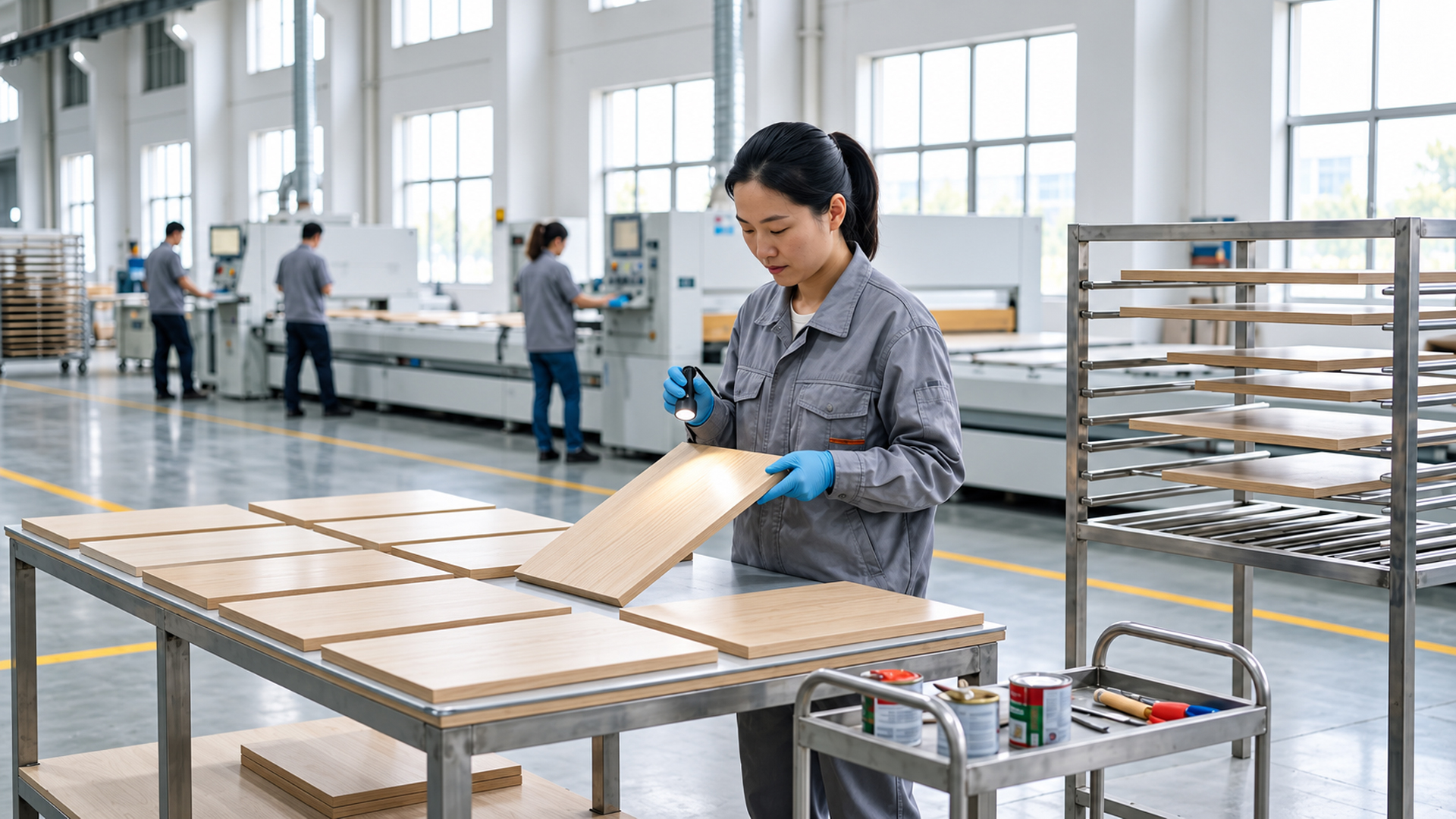
Gloss is normally measured with standardized geometries. ASTM D523 covers 20°, 60°, and 85° specular-gloss measurements, while ISO 2813 specifies the same three geometries for coating gloss measurement.
Those numbers are useful, but they do not fully describe whether a coated board still looks "raw." ASTM also notes that appearance involves other visual factors such as reflected-image definition, haze, and texture. That is why a finish can meet a low-gloss target and still look too rich, too smooth, too cloudy, or too obviously coated.
For procurement and technical teams, the request should therefore include both an instrumental gloss target and a visual standard panel. If the visual target is "as close as possible to freshly sanded wood," the reference board matters as much as the gloss reading.
Why Can Ultra-Matte Appearance Conflict With Abrasion Resistance?
Many matte finishes reduce reflected gloss by creating or preserving microscopic surface roughness. Published research on self-matting waterborne polyurethane systems shows that surface morphology is closely tied to gloss, and it also describes the difficulty of combining strong matting with high abrasion resistance. An open-access study in RSC Advances explicitly discusses this abrasion-resistance-versus-matting trade-off.
This becomes more important in flooring and other high-wear uses. A surface that looks beautifully flat when new can change after repeated rubbing, polishing, cleaning, or mechanical wear. The problem is not only whether the film survives; the question is whether the appearance survives without developing local shine.
That is why a buyer asking for ultra-matte appearance and heavy-use durability should define the wear test and the post-wear appearance criterion separately. "Abrasion resistance passed" does not automatically mean "the original matte appearance was retained."
Why Does “Keep the Natural Wood Color” Add Another Constraint?
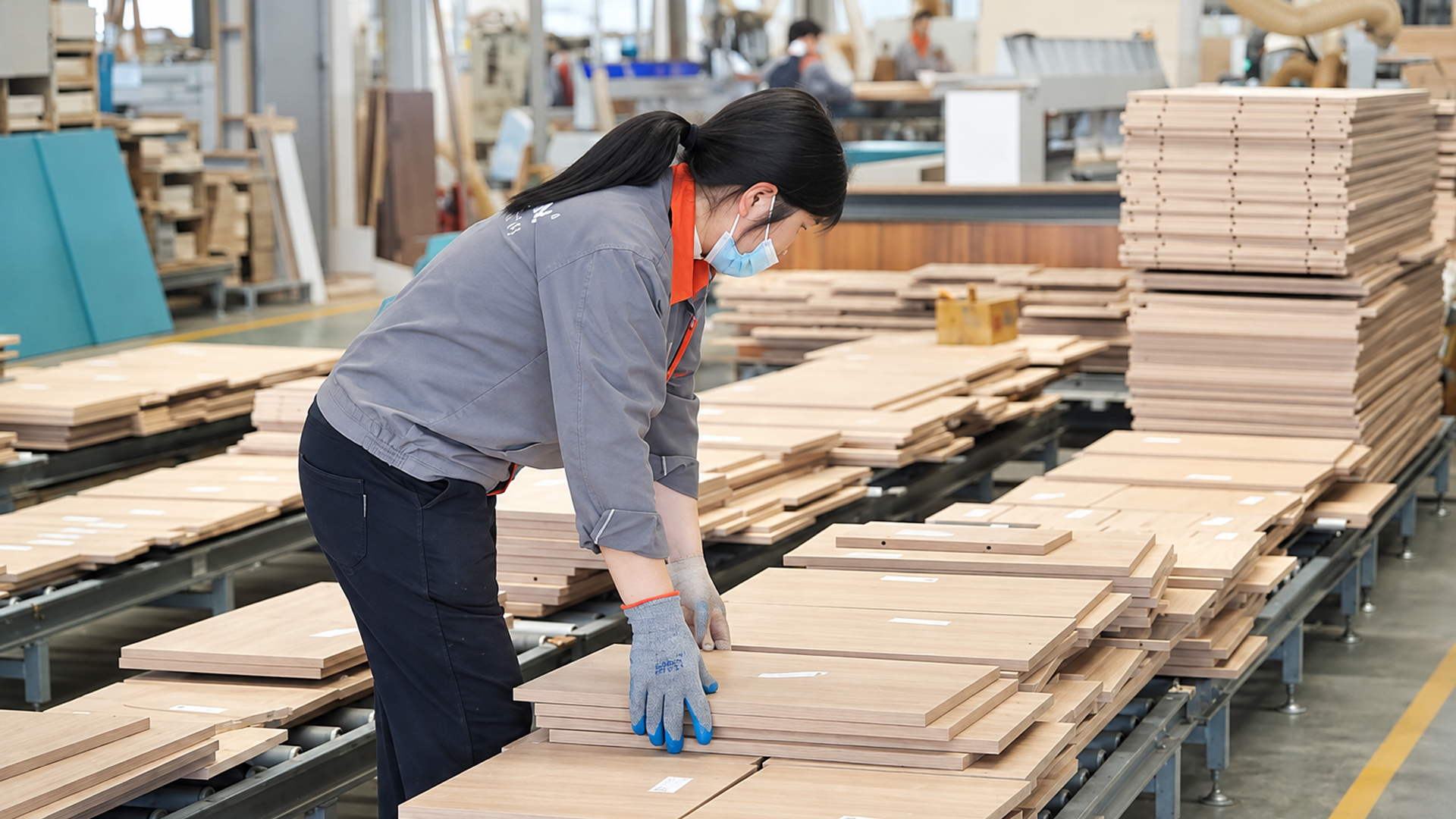
Transparent finishes are often chosen because they reveal the wood rather than hide it. But revealing the grain is not always the same as preserving an untreated look. Clear films can make pores and grain appear deeper or more contrasted, especially on open-grain or absorbent species.
For a raw-wood brief, the technical team should therefore compare the coated panel against the actual unfinished substrate, not against another clear coating. Wood species, sanding condition, sealer choice, wetting, film thickness, and the optical character of the binder all affect the final appearance.
This also explains why one universal "raw wood" formula is unrealistic. White oak, ash, maple, beech, and dense tropical hardwoods can respond differently to the same coating process. A formulation that is visually acceptable on one species should not be assumed to give the same result on another without panel testing.
Why Can’t a 2K Polyisocyanate Hardener Solve the Whole Problem?
In a 2K waterborne PU coating, the polyisocyanate hardener is one major formulation variable, not the finished coating itself. Dongsen supplies upstream waterbased polyisocyanate crosslinkers; Dongsen does not supply a finished raw-wood coating.
The final film depends on how the crosslinker interacts with the resin side, matting package, additives, pigment-free optical design, substrate, and process. The resin or PUD / acrylic-PUD binder system controls much of the film-forming behavior, while the polyisocyanate contributes to the 2K crosslinking network. Compatibility, NCO/OH balance, dispersion, pot life, cure, and application conditions still need to be tested in the actual formulation.
If color stability is part of the brief, the chemistry direction also matters. "Waterborne" describes the medium; it does not by itself prove non-yellowing behavior. For a broader chemistry comparison, see Dongsen's guide to aromatic vs aliphatic polyisocyanate directions.
For film-formation background, see Film Formation Mechanism of Coatings.
What Should You Screen in a 2K Waterborne Raw-Wood System?
The table below is a practical screening tool. It is not a product recommendation and it does not replace a TDS, formulation review, or sample test.
| Requirement | Main variables to screen | Typical failure signal | Next test to run |
|---|---|---|---|
| Ultra-low sheen | Matting method, surface flow, film build, cure profile | Gloss too high or local gloss variation | Measure gloss at the agreed angle and compare multiple film builds |
| Raw / invisible appearance | Wood species, sanding, wetting, sealer/topcoat design | Wood looks darker, wetter, or grain becomes too pronounced | Compare coated panel with freshly sanded reference under controlled light |
| Transparency | Binder clarity, crosslinker compatibility, dispersion stability, matting package | Haze, milkiness, particles, or loss of depth | Compatibility and drawdown screening before performance testing |
| Color stability | Resin chemistry, crosslinker chemistry, additives, substrate | Yellowing or visible warm tone after cure/aging | Run color comparison on the actual target wood and aging condition |
| Abrasion / scuff resistance | Crosslink density, resin design, film thickness, cure completeness | Wear, polish-up, local shine, scratching | Use the end-use abrasion method and inspect both damage and gloss change |
| Water / chemical resistance | Network formation, cure, resin/crosslinker balance | Whitening, softening, staining, swelling | Test the buyer's actual chemicals, contact time, and recovery condition |
| Practical 2K processing | Mix ratio, NCO/OH, dispersion, viscosity, pot life, temperature | Rapid viscosity rise, particles, foam, loss of leveling | Track mix stability and application quality through the real working window |
Screenshot this matrix before sample screening: it prevents a visually attractive lab panel from being treated as a complete performance pass.
Why Are Waterborne 2K Systems Especially Sensitive to Process?
A waterborne 2K system has to form a smooth film while water leaves the coating and the reactive crosslinking process develops. That means dispersion stability, application viscosity, pot life, wet-film flow, temperature, humidity, and substrate condition can all influence the final surface.
Very low-gloss finishes make those variations easier to see. Small changes in flow or surface texture can create gloss non-uniformity, while poor compatibility can create haze or particles. At the same time, pushing cure or crosslinking too aggressively may reduce the useful working window.
For that reason, the correct question is not simply "Which hardener is matte?" The better question is: Which crosslinker direction remains compatible with my resin and application process while the complete formula still meets the visual and durability target?
When Should You Stop Treating It as Simple Grade Matching?
If the brief combines ultra-low gloss, nearly unchanged wood color, high transparency, non-yellowing appearance, strong abrasion and scratch resistance, water and chemical resistance, and a practical 2K working window, it should be treated as a formulation-development project.
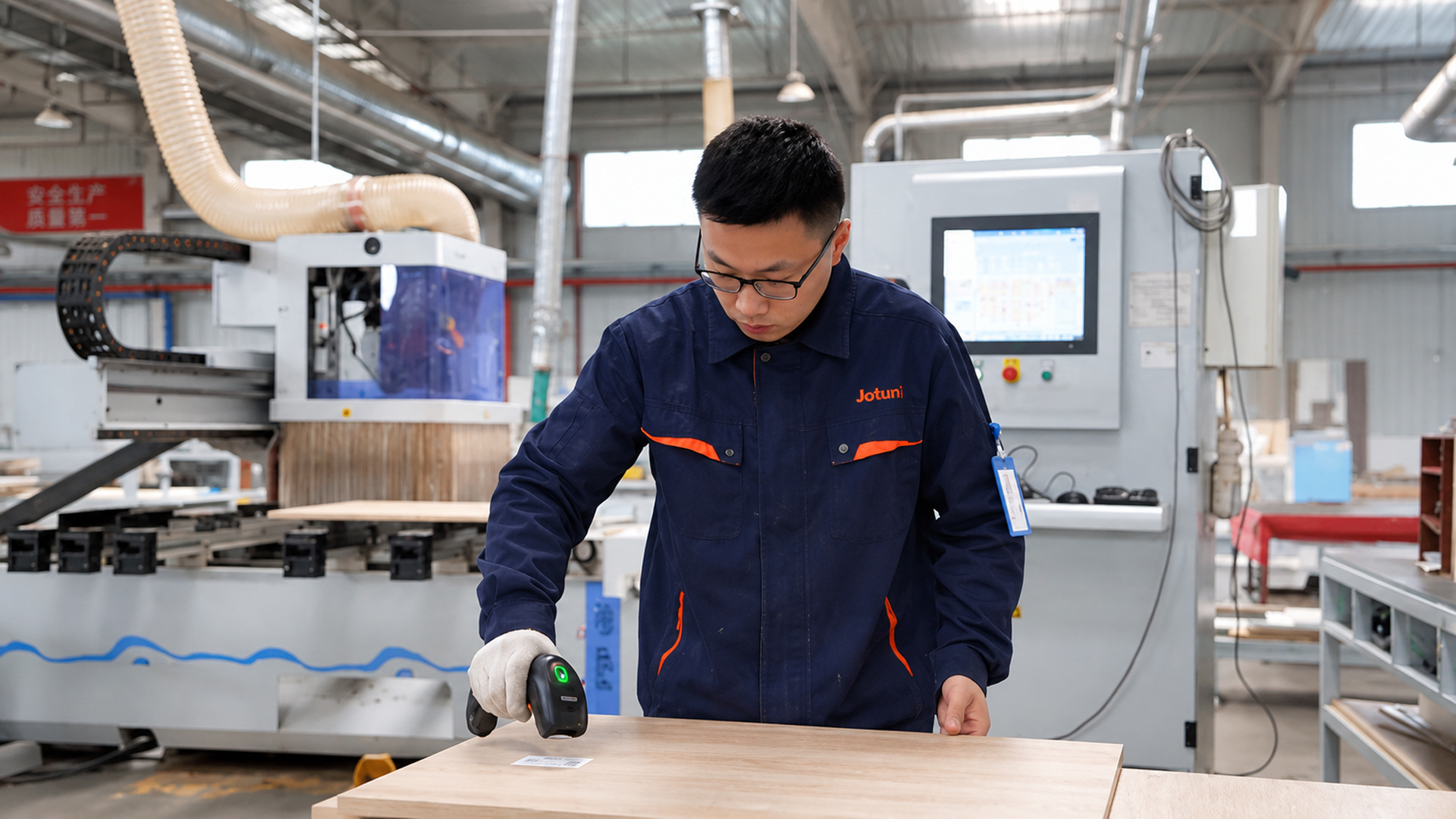
At that point, a hardener name alone is not enough evidence. The technical path should move from paper screening to compatibility drawdowns, appearance panels, pot-life checks, cure verification, and end-use durability testing. A technically sensible crosslinker can still fail the final brief if the resin, matting package, substrate, or process is not matched.
What Information Should You Send Before Requesting a Crosslinker?
- Wood species: oak, ash, maple, beech, tropical hardwood, or other substrate.
- Resin side: PUD, hydroxyl acrylic, acrylic/PUD hybrid, or other hydroxyl-functional binder.
- Target appearance: gloss target and measurement angle, raw/invisible reference, acceptable color shift.
- Application: furniture, cabinetry, millwork, residential flooring, heavy-commercial flooring, or another use.
- Process: spray, roller, curtain, line coating, room-temperature cure, forced dry, or other conditions.
- Performance tests: abrasion, scratch/scuff, water, alcohol, chemicals, block resistance, or customer-specific methods.
- Working window: required pot life, mixing method, viscosity range, and production temperature.
For waterborne wood coating context, see Dongsen's Waterbased Wood Coating application page.
Where Does Dongsen Fit in This Formulation?
Dongsen is a China-based manufacturer of polyisocyanate hardeners and crosslinkers. For 2K waterborne PU systems, Dongsen's role is the upstream crosslinker side of the formulation - not the finished coating.
For a raw-wood development project, Dongsen can review the resin type, application, gloss target, processing window, and test requirements to identify a water-dispersible polyisocyanate direction for screening. The final raw-wood appearance and end-use performance still require validation in the customer's complete formulation and on the target wood.
Key Takeaways
- Ultra-matte and raw-wood appearance are not the same specification.
- Gloss measurement should be paired with a visual reference panel for grain enhancement and color change.
- Matting, transparency, abrasion resistance, and appearance retention can pull the formulation in different directions.
- A polyisocyanate hardener is one major formulation variable; it cannot prove the performance of the finished coating by itself.
- When the brief stacks ultra-low gloss, minimal color change, and high durability, move from grade matching to full-system testing.
Need to Screen a 2K Waterborne Crosslinker?
Send your resin type, wood species, target gloss, application method, pot-life requirement, and end-use test standard. Dongsen can help narrow the crosslinker direction before sample screening.
Request TDS Request Sample Request Quotation Go to Inquiry Form
Request TDS, Sample or Formulation Screening
Please include the information that changes the selection decision:
- Wood species and end use
- Resin / binder type and hydroxyl information if available
- Target gloss and visual reference
- Application method, cure condition, and pot-life target
- Required abrasion, water, chemical, and appearance tests
FAQ: 2K Waterborne PU Raw-Wood Finishes
Is a matte wood coating the same as a raw-wood finish?
No. A matte coating mainly targets low specular gloss, while a raw-wood finish also tries to minimize visible film build, color change, grain enhancement, and the "wet look" associated with many clear finishes.
Can a polyisocyanate hardener create the raw-wood effect by itself?
No. The hardener is one major variable in a 2K formulation, but the result also depends on the resin, matting strategy, additives, wetting, film thickness, wood species, application, and cure conditions.
Does waterborne automatically mean non-yellowing?
No. Waterborne describes the coating medium. Color stability depends on the chemistry of the resin and crosslinker, additives, substrate, and aging conditions; it should be verified in the actual system.
Which gloss angle should be specified for an ultra-matte finish?
Specify the test method and geometry rather than using the word "matte" alone. ASTM D523 and ISO 2813 cover 20°, 60°, and 85° geometries; the agreed method should be fixed before comparing samples.
Can Dongsen recommend a grade from the gloss target alone?
No. A useful screening recommendation also needs the resin type, wood species, application method, cure condition, pot-life target, and the required appearance and durability tests.
About Dongsen
Dongsen manufactures polyisocyanate hardeners and crosslinkers in China for solventborne, waterborne, blocked, and moisture-curing polyurethane systems. The Group traces its chemical business to 1988. Dongsen supplies raw-material crosslinkers for formulation and sample screening; it does not supply finished raw-wood coatings. Learn more about Dongsen.
About the author - Vicky Zhao
Overseas Technical Support, Dongsen. Vicky works with international coating and adhesive formulators on waterbased and blocked polyisocyanate crosslinker selection, sample screening, and application troubleshooting. Connect on LinkedIn.