
How to Evaluate a Polyisocyanate Supplier for Southeast Asia: 7 Questions Before You Switch

Updated: 2026
How to Evaluate a Polyisocyanate Supplier for Southeast Asia: 7 Questions Before You Switch
Request TDS Request Sample Request Quotation Ask for a Suitable Grade
Why is switching a polyisocyanate supplier more than a price comparison?
A lower quotation can be useful, but it does not tell you whether the candidate belongs in the same chemistry family, whether its viscosity was measured under comparable conditions, whether the next batch will stay inside an agreed control window, or whether the supplier can support a trial when the first formulation needs adjustment.
For Southeast Asian buyers, the practical issue is wider because one plant may serve several destination markets. A product made locally may stay in the domestic market, while another batch may be exported to the United States, Europe, or another regulated destination. The documents you need can therefore change by destination and end use.

1. Are you comparing the same chemistry and functional role?
Start by confirming what the incumbent material actually does in the formulation. “Polyisocyanate hardener” can refer to different chemistry and delivery forms: aromatic or aliphatic polyisocyanates, blocked systems for heat-cured applications, water-dispersible systems, or moisture-curing prepolymers. Two products can both be called hardeners and still belong to different screening routes.
Ask for the chemistry type, functional role, carrier or medium, solids, NCO information, and intended cure mechanism before comparing commercial offers. For light-stability requirements, for example, aromatic-versus-aliphatic chemistry is a more meaningful starting variable than whether a product happens to be waterborne or solvent-borne.
Dongsen's current foreign-trade range includes aromatic polyisocyanates, aliphatic polyisocyanates, blocked polyisocyanates, moisture-curing materials, and waterbased polyisocyanates. These are raw-material hardeners and crosslinkers for formulators; Dongsen does not supply finished paints or finished adhesives.
2. Are the specification numbers truly comparable?
NCO content, solids and viscosity are useful screening fields, but the test condition matters. A viscosity value without temperature, method and unit is incomplete for cross-supplier comparison. Rotational viscosity in mPa·s or cps should not be treated as the same measurement as a flow-cup time in seconds.
A TDS match also does not establish compatibility, pot life, cure response or final film/bond performance. Use similar specifications to decide what deserves a controlled trial, not to declare a drop-in replacement.

3. What documents can the supplier provide before you request a sample?
Request the documentation package before the trial, not after a promising result. At minimum, the buyer should know which TDS, SDS and batch COA format will be available, how the product is identified by lot, and which destination-market documents the supplier can support for the intended shipment.
Quality-system certification can support supplier due diligence, but a certificate should still be checked for scope, issuer and validity. ISO explains ISO 9001 as a quality-management-system standard used to structure consistent processes and continual improvement; it is not a substitute for product-specific qualification.
If the finished product or raw material will enter the United States, the buyer may also need to verify relevant chemical status and obligations against the U.S. EPA TSCA Chemical Substance Inventory. Destination and end-use obligations vary, so treat regulatory documentation as a market-specific check rather than a one-size-fits-all supplier badge.
4. How does the supplier control batches and notify changes?
Supplier qualification should define what happens after the approved sample. Ask how production lots are identified, what appears on the COA, which specification window is controlled, how retained records or samples are handled, and how material changes that could affect your process are communicated.
The purpose is not to demand identical numbers in every batch. It is to make variation visible enough that purchasing, QC and formulation teams can distinguish normal lot-to-lot movement from a change that requires review.
Supplier Switching Scorecard: what evidence should you request?
| Question | Evidence to request | Green light | Red flag | Next action |
|---|---|---|---|---|
| Chemistry fit | TDS, chemistry type, functional role, carrier/medium | Same screening route is clear | Only a generic “PU hardener” description | Confirm chemistry before price comparison |
| Comparable specs | NCO, solids, viscosity plus method, unit and temperature | Conditions are stated and comparable | Numbers are compared under different conditions | Request matched-condition data |
| Documentation | SDS, TDS, COA format, destination-market support documents | Documents are current and traceable | Documents arrive only after trial or are inconsistent | Resolve gaps before scale-up |
| Batch/change control | Lot identification, COA limits, change-notification practice | Approved material can be traced by batch | No clear lot or change-control route | Define supplier-quality requirements |
| Technical response | Named technical contact and required input list | Questions start from your resin and process | Immediate “equivalent” claim without formulation data | Send controlled technical inputs |
| Scale-up path | Sample lot, pilot plan, production-lot confirmation | Trial stages and records are defined | Lab sample is treated as final approval | Run pilot and production confirmation |
| Logistics | Packaging, lead-time basis, Incoterms, shipment documentation | Commercial route is documented | Local stock or delivery claims cannot be verified | Validate the actual lane before approval |
Takeaway: the strongest supplier file is not the one with the most brochures. It is the one that lets purchasing, technical and QC teams trace the same material from specification to sample, batch, production trial and shipment.
5. Can technical support work from your real formulation and process?
A useful technical response should begin with the buyer's system, not with an instant model number. The supplier may need the resin or polyol family, current hardener chemistry, solids target, solvent or water phase, mix ratio or NCO/OH target when available, application method, working-time requirement, and actual cure or bake window.
For waterborne systems, compatibility and processing behavior may need a different screening route from solvent-borne 2K systems. For heat-cured blocked systems, the real bake window matters before an exact grade is discussed. For working-time problems, the appropriate route is to define the mixed-system requirement and then test it; a TDS viscosity does not predict pot life by itself.
Related Dongsen resources: Waterborne 2K and Pot Life / Processing Window.
6. How will the supplier support sample-to-production validation?
A sample is the beginning of qualification. Use the incumbent system as a control, record what remains constant, and make deliberate formulation changes visible. If the candidate needs a different use level, mixing order, solvent adjustment or cure condition, document that as a new trial arm rather than calling it an unchanged substitution.
The useful sequence is small-scale screening → controlled application test → pilot or line trial → production-lot confirmation. Acceptance criteria should be agreed before the result is judged. Depending on the application, these may include processing behavior, appearance, working time, cure response, adhesion, bond result, hardness, flexibility, weathering or other end-use properties. Test only what is relevant to the real product requirement.
7. Can the commercial and logistics route support your Southeast Asian operation?
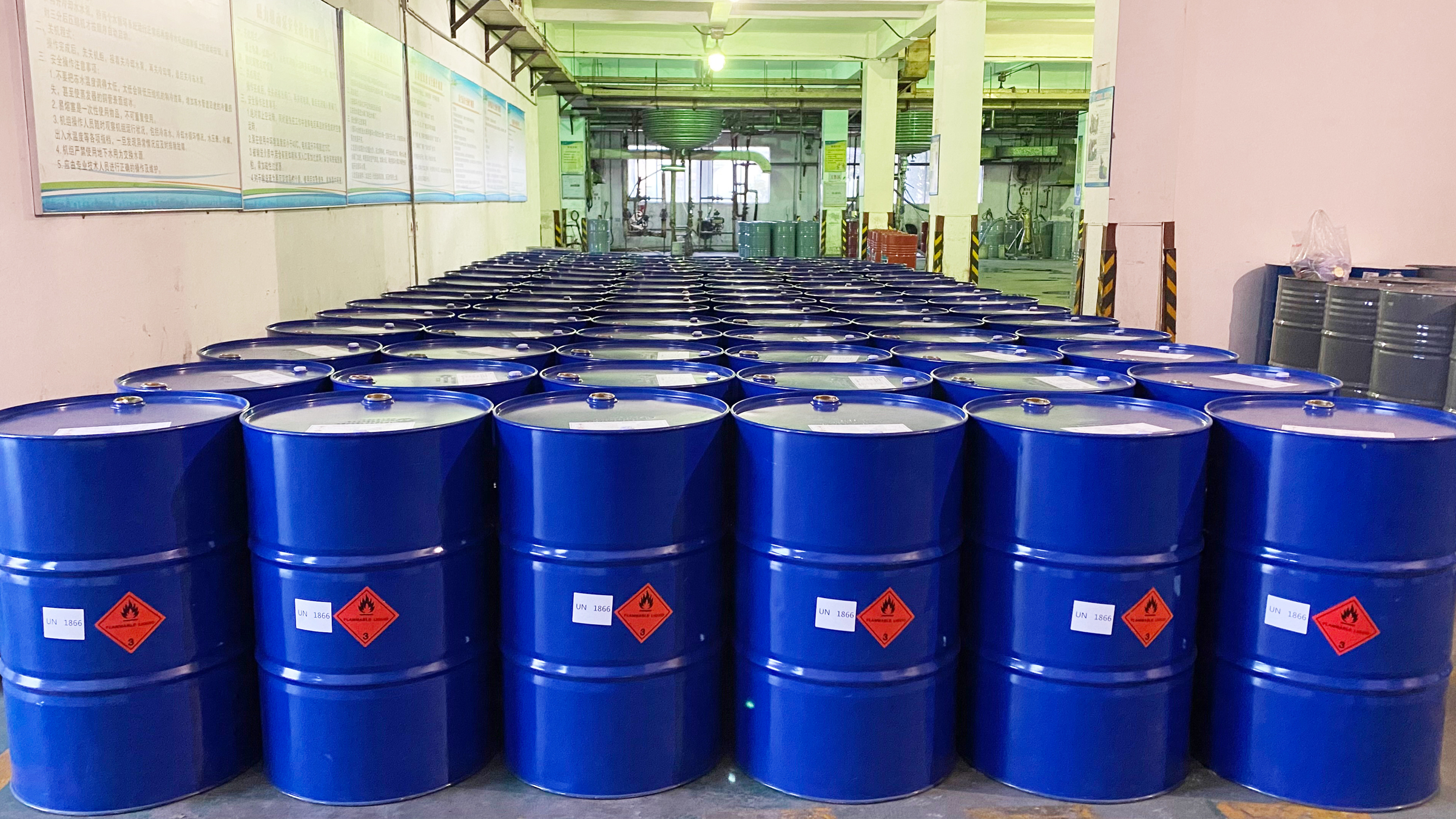
Once a candidate is technically viable, qualify the supply route. Confirm the packaging offered for the actual grade, quoted lead-time basis, Incoterms, shipment documentation, sample shipment process, minimum-order expectations, storage guidance, and how the supplier will handle a delivery or quality exception.
Do not treat “local support,” “local stock,” or “regional distributor” as established until the specific country, entity and service scope are verified. A supplier can still be suitable without a local warehouse if the agreed lead time, documentation, technical response and contingency route fit your operation.
If your Southeast Asian plant exports finished goods to the EU/EEA, add destination-specific compliance review. Under REACH Annex XVII Entry 74, industrial and professional use of diisocyanates is subject to concentration/training conditions. Dongsen does not claim an EU REACH registration unless and until the applicable registration route is confirmed; European inquiries should therefore be reviewed case by case.
How should a Southeast Asian buyer weight the seven questions?
The weighting changes with your business model. A local coating manufacturer may put process fit, batch consistency and lead time first. An exporter may move destination-market documentation higher. A distributor may care more about repeatable specifications, technical escalation and packaging options because one grade may be discussed with several downstream customers.
None of these priorities removes the technical gate. Commercial strength cannot turn an unqualified formulation candidate into an approved hardener, and a good laboratory result does not by itself approve the supplier's documentation or supply chain.
What is the next test—and which variables remain open?
Before requesting an exact alternative grade, send enough non-confidential information to define the screening route. A useful starting package is the incumbent TDS/SDS where shareable, current chemistry family, resin/polyol type, target solids, solvent or water phase, current use level or NCO/OH target if known, application method, actual cure/bake conditions, and the market where the material or finished product will be sold.
Open variables that usually require your data:
- Which chemistry and specification window must remain comparable?
- Which process variables and end-use properties define a technical pass?
- Which country-specific documents, commercial terms and delivery route must be accepted before the switch is complete?
Dongsen can use these inputs to identify a candidate direction for controlled evaluation. Any final grade selection should be confirmed by the buyer's own formulation and production testing.
Request a supplier-switching screening review
Send your application, current hardener information, process window and destination market. Dongsen can help narrow the chemistry direction, provide relevant TDS/COA/sample information for available external grades, and define what still needs same-condition validation.
Request TDS Request Sample Request Quotation Go to Inquiry Form
Tell us what you are trying to switch
- Current hardener chemistry or TDS
- Resin/polyol and solvent or water system
- Application and actual cure/process window
- Target country or export destination
- Sample, documentation and commercial requirements
Frequently asked questions
Can I switch polyisocyanate suppliers if NCO content and solids are similar?
No. Similar NCO content and solids can justify screening, but they do not prove compatibility, unchanged use level, pot life, cure response or end-use performance. Run same-condition trials before approval.
Should viscosity be part of supplier comparison?
Yes, when the test method, temperature and units are comparable. A viscosity number measured under a different condition should not be treated as a direct match.
What should I send before requesting an alternative sample?
Send the current TDS/SDS where shareable, chemistry family, resin/polyol type, solvent or water phase, use level or NCO/OH target if known, application method, cure/process conditions, and the properties that define a pass.
Do I need a supplier with a warehouse in Southeast Asia?
Not necessarily. The relevant question is whether the verified lead time, shipment documentation, packaging, technical response and contingency route fit your operation. Treat any local-stock or local-support claim as something to verify.
What if our Southeast Asian plant exports to the United States or Europe?
Evaluate the destination-market requirements separately from the factory location. For the United States, check applicable TSCA obligations; for EU/EEA industrial and professional use, review the relevant REACH requirements, including the diisocyanate restriction. Obtain legal or regulatory confirmation for your specific product and use.
Can Dongsen identify an exact drop-in replacement for another supplier’s hardener?
Dongsen can screen a candidate direction from non-confidential chemistry, specifications and process requirements, then support sample evaluation. Without same-condition evidence, Dongsen does not describe a candidate as interchangeable or a drop-in replacement.
Key takeaways
- Start with chemistry and functional role before comparing prices or model numbers.
- Compare NCO, solids and viscosity only with the relevant methods and conditions understood.
- Separate material qualification from supplier-quality, documentation and logistics approval.
- Move from sample to controlled trial, pilot/line validation and production-lot confirmation before completing a switch.
- For Southeast Asian operations, check destination-market requirements as well as the local supply route.
About Dongsen
Dongsen is a licensed manufacturer in Shaoguan, China, focused on polyisocyanate hardeners and crosslinkers for coating and adhesive formulators. The group was founded in 1988, holds 25+ patents, and serves customers across 40+ export countries. The Shaoguan curing-agent production base has a design capacity of 26,000 tonnes per year. Dongsen's current quality and environmental management systems are certified to ISO 9001:2015 and ISO 14001:2015 by ACM International Certification Limited under IAF mutual recognition, with the recorded certificates valid through 4 August 2028.
Company compliance records include TSCA, China REACH and IECSC; applicability and documentation still need to be confirmed for the specific grade, destination and end use. For supplier-switching projects, Dongsen can support chemistry-direction screening, product documentation, samples and application discussion within the evidence available for the specific grade and customer system. Final formulation and production approval remains application-specific.
Overseas Technical Support, Dongsen. Vicky works with international coating and adhesive formulators on waterbased and blocked polyisocyanate crosslinker selection, sample screening, and application troubleshooting. Connect on LinkedIn.