
All About Two-component 2K Polyurethane Adhesives
Updated: 2026
Choosing the Isocyanate Hardener for 2K Polyurethane Laminating Adhesives
Request TDS Request Sample Request Quotation Ask for a Suitable Grade
Quick answer: A two-component (2K) polyurethane laminating adhesive cures when a hydroxyl resin (Part A) reacts with an isocyanate hardener (Part B). Dongsen supplies the Part B hardener — for example DL-75, a TDI adduct at 75% solids and 13% NCO — which formulators crosslink with their own polyol. The hardener you pick is what decides final bond strength, laminate flexibility, pot life and heat/chemical resistance. All values are typical and subject to the current TDS/COA.
What is a 2K polyurethane laminating adhesive, and where does the hardener sit?
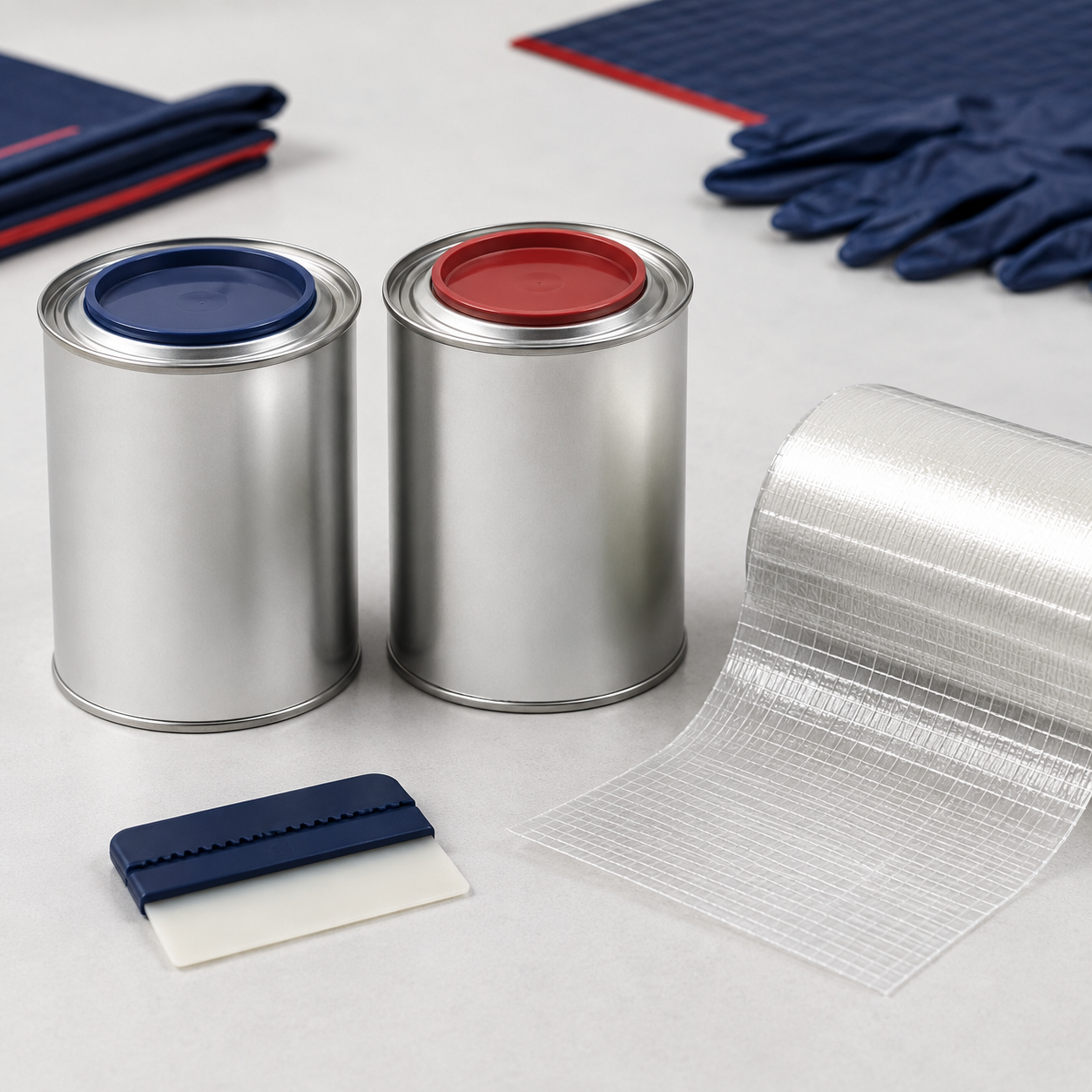
Two-component polyurethane adhesives are among the highest-volume product types in the PU adhesive family, valued for adjustable performance, high bond strength and a wide bonding range. They are reactive systems: Part A (the hydroxyl resin) and Part B (the isocyanate hardener) are packaged separately and mixed at a defined ratio just before use. Once mixed, the free isocyanate (NCO) groups react with hydroxyl (OH) groups to build a crosslinked polyurethane network.
Dongsen supplies the Part B isocyanate hardener (crosslinker) only. We do not produce finished adhesives or the Part A polyol resin — formulators pair a Dongsen hardener with their own hydroxyl component. That is also why the hardener is the lever to talk about first: in a 2K laminate, the resin sets the backbone, but the isocyanate hardener is the variable that crosslinks it into the final film.
Why it works: the NCO–OH reaction (and what happens to excess NCO)
Curing is the reaction of isocyanate (NCO) groups on the hardener with hydroxyl (OH) groups on the resin, forming urethane linkages. 2K laminating adhesives are usually formulated at an NCO/OH molar ratio of 1 or higher. Part of the NCO reacts with OH to build the adhesive network; the excess NCO does not form “urethane methacrylate” (a common mis-statement — methacrylate is acrylic chemistry). Instead, surplus isocyanate reacts onward to form biuret, allophanate and urea linkages, raising crosslink density and improving the cohesive strength and heat resistance of the bond line.
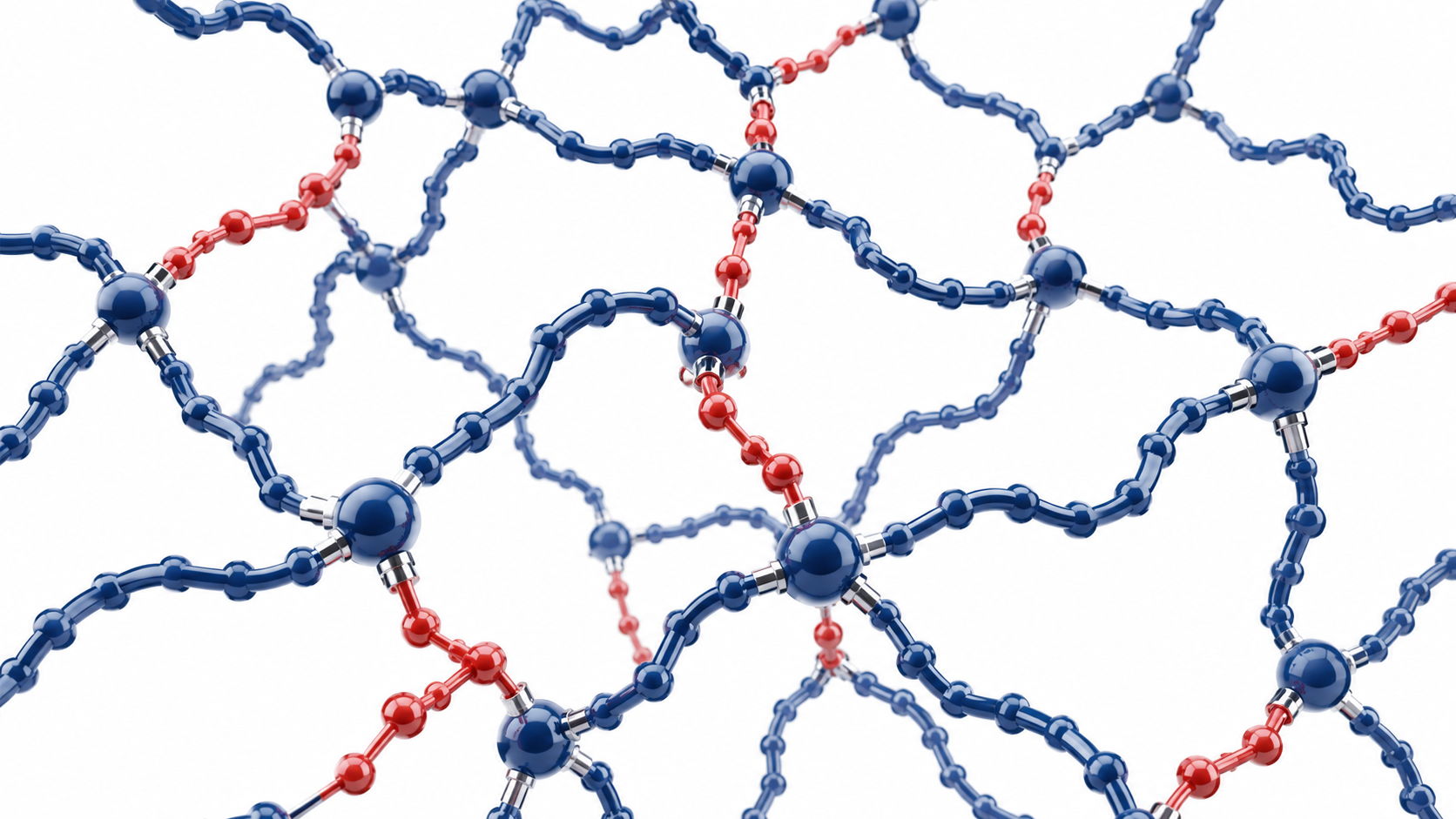
This is why the hardener choice is decisive. A higher reactive-NCO loading means more isocyanate available per kilogram to build that crosslinked network — which is exactly where DL-75 earns its place in laminating adhesives.
Two ways to cure: the 2K solvent route vs the 1K heat-activated (blocked) route
Most flexible-packaging and industrial laminates fall into one of two curing strategies. The mechanism — not the marketing — is what tells you which Dongsen hardener fits.
| Route | How it cures | Performance it gives | Best-fit Dongsen hardener |
|---|---|---|---|
| 2K solvent (mix A + B) | Free NCO reacts with the polyol at room temperature after mixing; cure speed tuned by catalyst | High initial tack, strong final bond, flexible laminate; defined pot life after mixing | DL-75 (TDI adduct, 13% NCO, flexibility) |
| 1K heat-activated (blocked) | NCO is chemically “blocked”; the component is stable until heat releases (deblocks) the NCO to cure on the bake line | One component, no pot life, long working stability; cures on demand at the oven | DXB-3370G (deblocks 80–100°C); DXB-3375D (deblocks 130–140°C, aliphatic HDI) |
Takeaway: if your line mixes and applies wet, the 2K route with a TDI-adduct hardener like DL-75 gives the strong, flexible bond laminates need. If pot life on the line is the problem — mixed adhesive gelling, waste, inconsistent ratio — a blocked 1K hardener removes pot life entirely: it stays single-component until the bake deblocks it. The low end of that window matters: an 80–100°C deblock means you can cure on heat-sensitive films without scorching the substrate.
Product comparison: DL-75 vs DXB-3370G vs DXB-3375D
| Model | Isocyanate type | Solid % | NCO % | Free monomer | Viscosity (cps) | Deblock °C | Std solvent | Reads as |
|---|---|---|---|---|---|---|---|---|
| DL-75 | TDI adduct (aromatic) | 75±2 | 13.0±0.5 | TDI ≤0.5 | 1500±500 | — (2K, room temp) | — | High NCO + flexibility → strong, flexible 2K laminating bond |
| DXB-3370G | HDI trimer, blocked (aliphatic) | 70.0±2.0 | 7.5±0.5 (valid) | ≤0.5 | 2000±1000 | 80–100 | PMA | Low-temp 1K cure → no pot life, gentle on heat-sensitive film |
| DXB-3375D | HDI trimer, blocked (aliphatic) | 75.0±2.0 | 11.2±0.5 (valid) | ≤0.2 | 2500±1000 | 130–140 | Solvent Naphtha 100 | Higher-bake 1K, aliphatic → light-stable, non-yellowing laminate |
Summary: DL-75 is the workhorse for wet-mixed 2K laminating adhesives — its 13% NCO and flexibility feature give a strong yet pliable bond line. The two DXB blocked grades are the 1K, heat-activated alternative when you want to eliminate pot life: DXB-3370G for low-temperature deblocking (80–100°C) on heat-sensitive substrates, and DXB-3375D when a higher bake (130–140°C) is available and you need light stability. Because both DXB grades are hexamethylene diisocyanate (HDI)-based (aliphatic), they resist yellowing — the variable that controls yellowing is aliphatic vs aromatic chemistry, not solvent vs water. All values are typical and subject to the current TDS/COA.
Which grade for which job? An application selection guide
Standard flexible-packaging / film-to-film lamination, mixed wet: start with DL-75. The TDI-adduct backbone delivers the high bond strength and laminate flexibility that composite films need (cold resistance, oil and chemical resistance, clarity), and its high NCO supports good crosslink density.

Pot-life trouble on the line: if mixed adhesive is gelling, wasting or drifting off ratio, move to a blocked 1K hardener (DXB-3370G or DXB-3375D). One component, no pot life, cures on the bake.
Heat-sensitive films / energy-saving ovens: DXB-3370G deblocks at 80–100°C — the lowest-temperature route, so you cure without thermally stressing the substrate.
Clarity and long-term light stability: choose an aliphatic HDI-based grade such as DXB-3375D. Aromatic toluene diisocyanate (TDI) chemistry can yellow over time; aliphatic HDI does not.
NCO/OH ratio and pot life, briefly: run the ratio at 1 or above so excess NCO can build biuret/allophanate/urea links for heat resistance. Keep Part B sealed and away from moisture — isocyanate reacts with water. If a polyol-side component crystallizes in cold weather, warm it to redissolve before use (no open flame).
Related Dongsen raw materials
If your project sits next to laminating adhesives, these Dongsen hardener families pair into the same workflows:
- SA series (shoe-sole / footwear adhesives): hardeners for 2K PU footwear adhesives — pale-colored, low discoloration, with low free monomer (≤0.1%) for strong inter-layer bonding.
- WD waterborne polyisocyanates: water-dispersible HDI-based crosslinkers used to lift adhesion and performance in waterborne systems.
- Moisture-curing polyisocyanates: 1K systems that cure with ambient moisture, used for tough, abrasion-resistant adhesive and primer films.
Browse the full solvent-based blocked polyisocyanate range or talk to us about a grade for your substrate.
Still deciding on a grade?
If you are facing any of these on the line:
- Mixed 2K adhesive gelling or wasting before you can apply it (pot-life loss)
- Laminate yellowing or hazing over shelf life
- Substrate scorching because the cure temperature is too high
Tell us your substrate, polyol type and cure conditions and we will match a hardener — or send a sample to screen.
Request TDS Request Sample Request Quotation Go to Inquiry Form
Request a hardener recommendation or sample
Send us your application and we will respond with a grade and data:
✅ Free TDS & COA for the matched grade
✅ Sample for line screening
✅ NCO/OH ratio and cure-condition guidance
✅ Quotation with MOQ and lead time
FAQ
Which Dongsen hardener do I use for a 2K solvent-based laminating adhesive?
DL-75, a TDI adduct at 75% solids and 13% NCO with a flexibility feature, is the standard Part B for wet-mixed 2K laminating adhesives. You crosslink it with your own polyol. Typical values, subject to current TDS/COA.
What NCO/OH ratio should a 2K PU laminating adhesive run at?
Generally 1 or higher. Excess isocyanate reacts onward to form biuret, allophanate and urea linkages, which raise crosslink density and improve cohesive strength and heat resistance.
How do I get a non-yellowing, light-stable laminate?
Use an aliphatic HDI-based hardener such as the blocked DXB-3375D. Aromatic (TDI) chemistry can yellow; aliphatic HDI does not. The deciding variable is aliphatic vs aromatic chemistry — not solvent vs water.
How do I avoid pot-life problems on the line?
Switch from a mixed 2K system to a blocked 1K heat-activated hardener. DXB-3370G stays single-component and deblocks at 80–100°C, so there is no pot life — it cures on the bake.
How should the isocyanate hardener (Part B) be stored?
Keep it sealed and away from water and moisture, since isocyanate reacts with water. If a polyol-side component crystallizes in cold weather, warm it to redissolve before use — never with an open flame.
Do you supply the finished adhesive or the Part A polyol?
No. Dongsen supplies the isocyanate hardener (Part B / crosslinker) only. You pair it with your own hydroxyl resin to make the finished adhesive.
Can you supply to Europe?
European customers are served on an inquiry and sampling basis. Note that the EU requires diisocyanate training and specific labelling for these materials; contact us to discuss your route.
About the author — Vicky Zhao
Overseas Technical Support, Dongsen. Vicky works with international coating and adhesive formulators on waterborne and blocked polyisocyanate crosslinker selection, sample screening, and application troubleshooting. Connect on LinkedIn.
About Dongsen
Shaoguan Dongsen Synthetic Materials Co., Ltd. (Dongsen Chemicals) has been producing polyisocyanate hardeners and crosslinkers since 1998. Our production base in Wengyuan, Shaoguan covers about 56,000 m² with a design capacity of 26,000 tonnes per year, and we export to more than 40 countries. We supply low-free-monomer and low-odor grades to coating and adhesive formulators worldwide.