
Isocyanates Explained: Choosing TDI, HDI & Blocked Polyisocyanate Hardeners

Updated: 8 November 2026
Quick Answer: Isocyanates contain reactive NCO groups that can react with hydroxyl-functional resins to form polyurethane. For coating and adhesive formulation, choose a polyisocyanate crosslinker by backbone chemistry, molecular architecture, cure route and NCO/OH balance, then test compatibility and the usable processing window. Dongsen manufactures and supplies these upstream curing-agent raw materials; it does not sell finished coatings or complete resin formulations.
What is the difference between a monomer and a polyisocyanate hardener?
An isocyanate group has the structure –N=C=O, usually abbreviated to NCO. A diisocyanate monomer is a small molecule with two NCO groups. TDI, MDI, HDI and IPDI describe different starting backbones; they do not by themselves describe the viscosity, functionality or cure behavior of a finished commercial hardener.
Coating hardeners commonly contain larger, modified molecules: adducts, biurets, isocyanurate trimers, prepolymers or hydrophilically modified polyisocyanates. Their remaining NCO groups can react with active-hydrogen groups. For hydroxyl-functional binders, the central reaction is NCO + OH → urethane linkage. A connected network requires suitable functionality on the reacting components and enough conversion; two strictly difunctional components alone mainly extend chains.
Reactive NCO content and free monomer residual measure different things. Reactive NCO includes available NCO groups attached to larger hardener molecules. Free monomer residual measures small, unreacted diisocyanate molecules remaining in the product. A low residual-monomer content does not mean that the hardener has little reactive NCO or that its handling risks disappear. In blocked systems, distinguish latent or valid NCO from residual unblocked NCO as well.
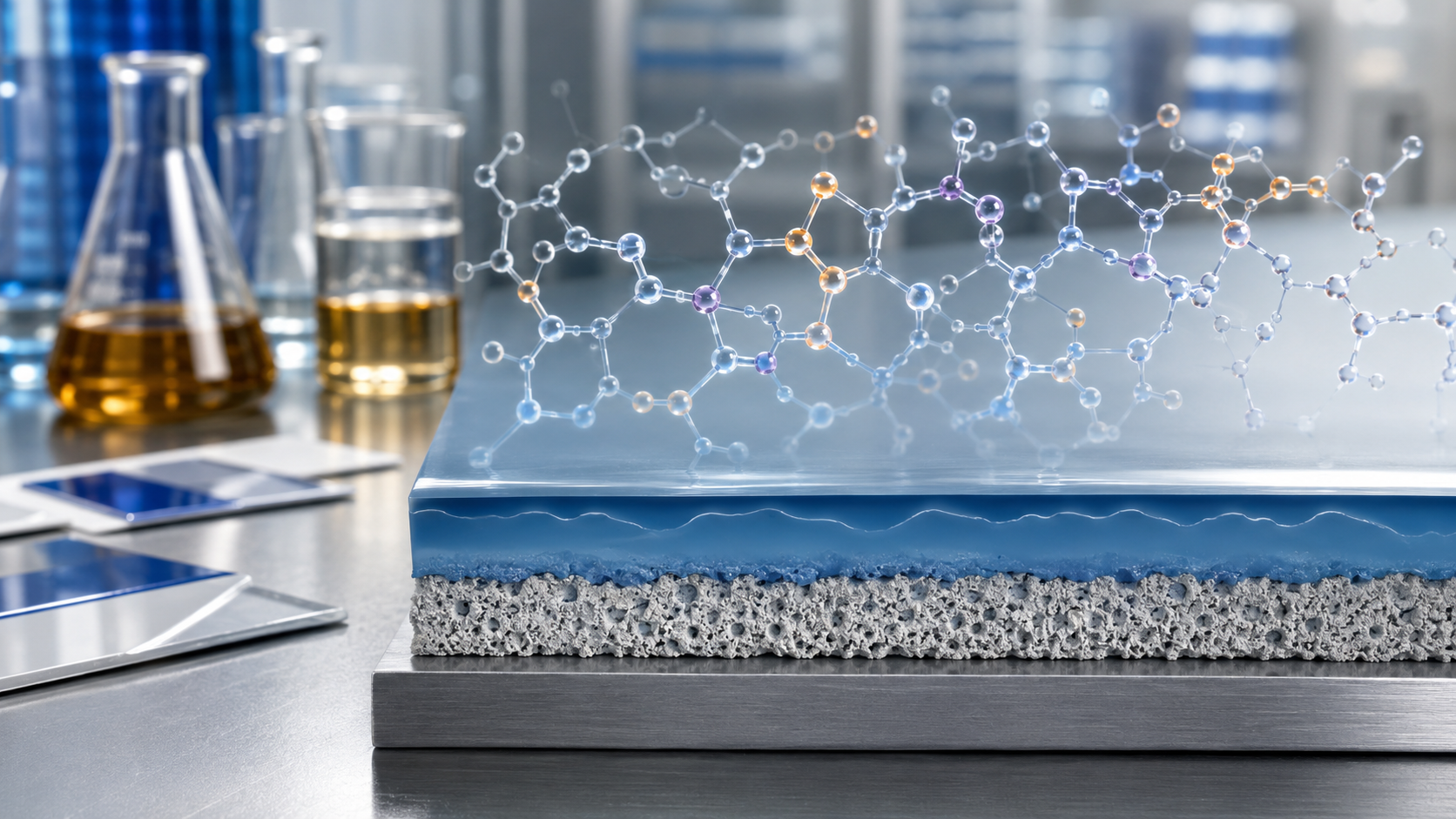
The crosslinker is one key formulation variable. Resin chemistry, catalyst, pigments, additives, solvent or water balance, substrate preparation and cure conditions also shape adhesion, flexibility, appearance and durability. A hardener specification cannot predict the complete coating or adhesive performance.
How do TDI, MDI, HDI and IPDI compare?
First decide how the film will be exposed and how it must cure. Aromatic NCO groups generally react more readily with hydroxyl groups than comparable aliphatic groups under similar conditions. Substitution, steric hindrance, catalysts, temperature and modification can change that trend. The following table describes chemistry-level screening directions, not a ranking of Dongsen grades.
On a phone, swipe each table horizontally to read all columns.
| Backbone | Chemical class | Reaction tendency | Weathering / yellowing | Common formulation contexts | Selection limits |
|---|---|---|---|---|---|
| TDI | Aromatic; toluene diisocyanate | Aromatic reactivity; the two NCO groups can differ in reactivity because of position and steric effects. | Aromatic structures can discolor under light exposure. | Modified hardeners for interior wood finishes, inks and selected PU adhesives. | Confirm the modified grade, residual monomer, working time and resin compatibility. Avoid assuming exterior color retention. |
| MDI | Aromatic; methylene diphenyl diisocyanate | Generally reactive toward OH; monomeric, polymeric and prepolymer forms behave differently. | Yellowing must be considered where color or clear appearance matters. | Adhesives, sealers, primers and moisture-curing prepolymer systems. | Choose the actual molecular form and handling conditions; MDI identity alone proves neither flexibility nor low residual monomer. |
| HDI | Aliphatic; hexamethylene diisocyanate | Often less reactive toward OH than aromatic systems without catalyst; architecture and formulation affect cure. | Common starting direction for light-stable, color-retentive films. | Modified hardeners for clear coats, automotive refinish, industrial topcoats and waterborne 2K systems. | Weatherability belongs to the tested full film. Check application viscosity, functionality and the required cure window. |
| IPDI | Cycloaliphatic; isophorone diisocyanate | Structurally different NCO groups and steric hindrance influence reaction; catalyst choice matters. | Commonly considered for light-stable systems. | Specialty coating crosslinkers and blocked baking-system directions. | Do not transfer monomer behavior directly to an IPDI-based trimer or blocked grade; verify compatibility and cure conversion. |
Selection takeaway: for color-critical exterior films, start screening aliphatic or cycloaliphatic chemistry, then validate the complete formulation. Waterborne delivery is a separate choice: adding water dispersibility does not itself confer yellowing resistance.
What changes when the hardener is an adduct, biuret or trimer?
Backbone and molecular architecture answer different questions. HDI can be modified into a biuret or an isocyanurate trimer; TDI can form a polyol adduct or a trimer. Architecture changes the way NCO groups are distributed, but a family name does not fix the average functionality or viscosity of every commercial grade.
| Form | Structural idea | Typical functionality concept | Viscosity / network implications | Boundary to check |
|---|---|---|---|---|
| Adduct | Diisocyanate reacted with a polyol, retaining terminal NCO groups. | An ideal TMP adduct made from a triol and three diisocyanate molecules can retain three NCO groups. Other polyols and commercial mixtures differ. | Polyol core, molecular size and carrier affect flow and network spacing; compare at a stated solids basis. | The adduct label does not establish flexibility, drying speed or compatibility in your resin. |
| Biuret | Biuret linkages join isocyanate-derived segments; HDI biuret is a familiar coating-hardener form. | The ideal simple biuret has about three remaining NCO groups; higher species change the average. | Structure and intermolecular association can affect viscosity and network development; dilution and oligomer distribution remain relevant. | Do not rank its film flexibility or viscosity against a trimer without comparable grade and formulation data. |
| Trimer / isocyanurate | Three NCO groups form an isocyanurate ring, leaving other NCO groups available. | The ideal simple trimer of a diisocyanate retains three NCO groups. A commercial product may contain higher oligomers. | The ring and available functionality affect network architecture; usable crosslink density also depends on resin functionality and cure conversion. | A trimer does not necessarily create the highest crosslink density in every formulation. |
Selection takeaway: compare effective functionality, supplied NCO, solids and viscosity under matching methods and temperatures. Then compare films at the same target NCO/OH ratio and cure conditions. Equal hardener weights do not preserve the chemical ratio when NCO contents differ.
What does low free monomer actually tell you?
A residual-monomer specification helps characterize the small diisocyanate fraction in a defined hardener. Read the identity of the measured monomer, mass basis, analytical method, detection or quantification limit, and whether the value is a specification maximum or a batch result. A maximum is not an actual measured concentration.
A statement such as "Free Monomer ≤0.3%" is meaningful only when current authoritative evidence supports it for the particular grade and measurement basis. Check the grade's current specification and analytical evidence before using that limit. It is not an industry-wide regulatory limit, proof of zero exposure, a non-toxic designation or an environmental certification. "Not detected" also needs a stated method and detection limit.
Modified polyisocyanates can still present inhalation and skin hazards, including exposure to aerosol during spraying. Evaluate the complete product SDS, solvent package and actual process. Lower residual monomer is one risk-control input, not a replacement for exposure controls.
Which cure route fits the process?
Separate the need for immediate NCO reactivity from the need for storage before heat curing. Water compatibility is another axis: a water-dispersible free-NCO hardener and a water-based blocked hardener do not follow the same cure route.
| Route | How it reacts | When to screen it | Main constraint |
|---|---|---|---|
| Reactive 2K | Available NCO reacts after mixing with the OH-functional component. | A two-component process can meter and mix shortly before application. | Measure the usable pot life at actual temperature, batch size and application conditions. |
| Blocked 1K bake | Blocking temporarily suppresses NCO reactivity; heating enables crosslinking through the grade's reaction pathway. | The resin and crosslinker must remain together before a controlled bake. | Deblocking temperature is not a complete cure schedule. Confirm part temperature, dwell time, catalyst, conversion and emissions control. |
| Moisture cure | NCO-terminated material reacts with moisture; reaction can form urea linkages and release CO₂. | A suitable one-component process relies on controlled moisture exposure. | Humidity, film or bond-line thickness and gas release can affect through-cure and bubbles. |
| Waterborne 2K | A water-dispersible polyisocyanate is mixed into a compatible aqueous binder; NCO also competes with water. | The target resin and application require an aqueous delivery route. For a parameter-led evaluation candidate, review WD-8980 water-dispersible HDI hardener; compatibility and production/supply status require confirmation. | Check dispersion, pH, mixing, co-solvents, appearance and performance over time; a fluid mix can already be beyond usable pot life. |
Selection takeaway: define the real application window before choosing a cure route. Pot life is the time during which the mixed material still meets application and film requirements; gel time is a different endpoint. For blocked systems, verify storage stability and the actual part-temperature/time profile rather than treating the oven setpoint as the film temperature.
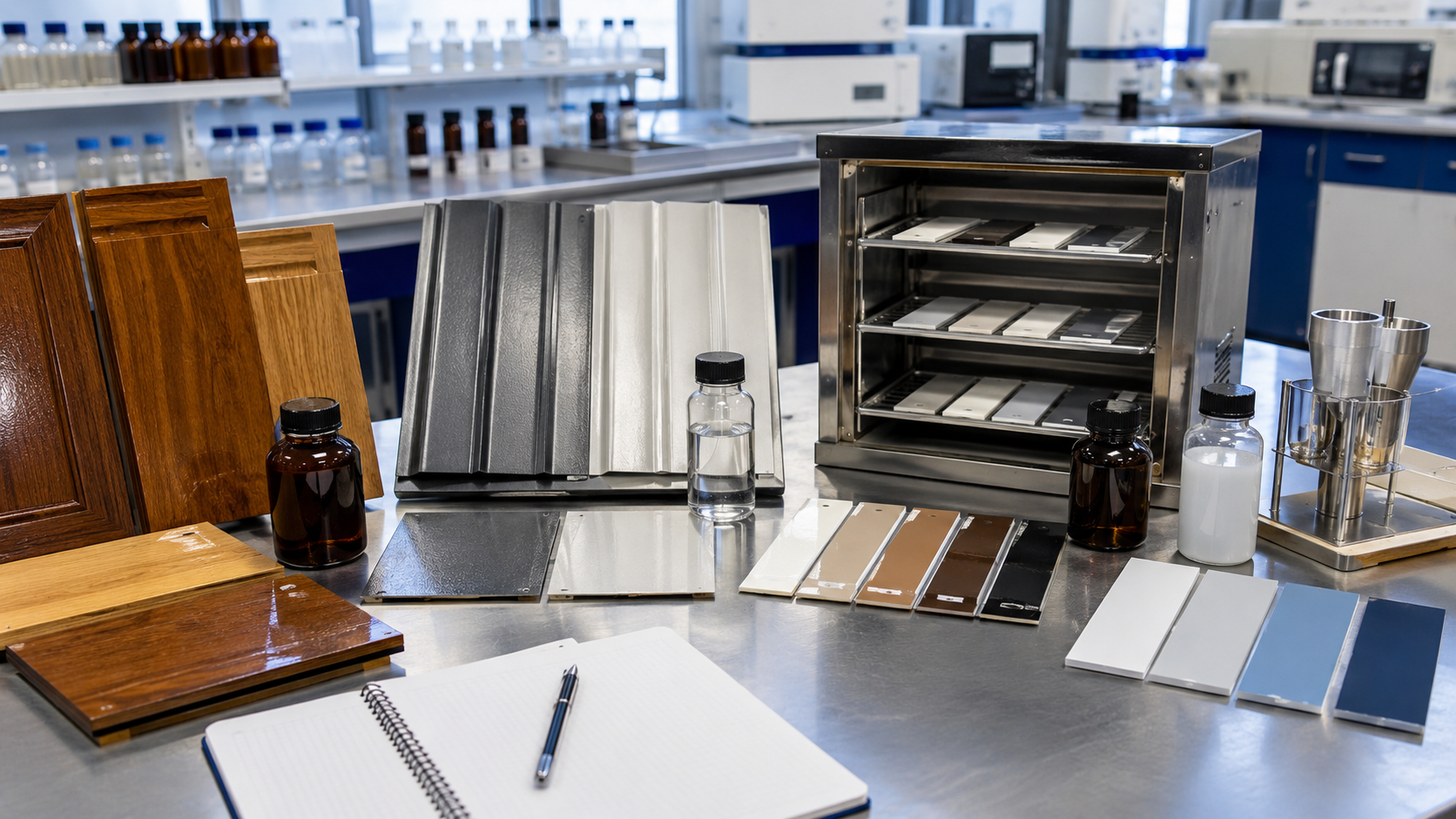
For the heat-activated branch, the blocked isocyanate crosslinker selection guide develops the bake-window questions; the can and coil coating crosslinker guide provides a separate application-context discussion.
How do you calculate the NCO/OH mixing ratio?
Calculate equivalents before converting them to a mass ratio. Use the hardener NCO content in the form being weighed and the resin OH value on its declared basis. The constants below use approximately 42 g per NCO equivalent and 56,100 mg KOH per hydroxyl equivalent.
NCO/OH calculation card
EW_NCO (g/eq) = 4200 / NCO(wt%)
OH equivalent weight (g/eq) = 56100 / OH value (mg KOH/g)
OH equivalents = resin mass on the OH-value basis / OH equivalent weight
Hardener mass = OH equivalents × target NCO/OH ratio × EW_NCO
Enter NCO wt% as a percentage number: use 16 for 16%, not 0.16. A ratio of 1.05 means 1.05 NCO equivalents per OH equivalent; the corresponding percentage index is 105. Confirm which convention the formulation uses.
Worked example: resin solution plus supplied-form hardener
Hypothetical inputs, not Dongsen grade specifications: 100 g of a resin solution at 60% resin solids; OH value 112 mg KOH/g on dry resin solids; hardener NCO 16.0 wt% as supplied; target NCO/OH ratio 1.05. Assume the carrier contributes no reactive OH and no additional reactive ingredients or moisture correction is required.
- Dry resin mass = 100 × 0.60 = 60.0 g.
- OH equivalent weight = 56100 / 112 = 500.89 g/eq of resin solids.
- OH equivalents = 60.0 / 500.89 = 0.11979 eq.
- Supplied-form NCO equivalent weight = 4200 / 16.0 = 262.50 g/eq.
- Hardener mass = 0.11979 × 1.05 × 262.50 = 33.02 g as supplied, using unrounded intermediates.
The starting mass ratio is therefore 100 parts resin solution : 33.02 parts supplied hardener. It is not a universal mixing ratio. At ratio 1.00, the same inputs would require 31.44 g. The illustrative 1.05 ratio is an assumption, not a recommended index for all coatings or adhesives.
Avoid correcting solids twice. If the OH value is already reported on the supplied resin solution, use the solution mass directly. If NCO is reported as supplied, use it directly for the hardener charge: do not multiply it by the hardener solids fraction again. The hardener's solids and carrier still matter when balancing final formulation solids and application viscosity.
For a resin blend, add each component's OH equivalents before calculating the hardener charge: total OH eq = Σ(mass_i × OH value_i / 56100), with every mass matched to its OH-value basis. Blocked crosslinkers require a confirmed latent/valid NCO basis. Water, amines and other reactive ingredients need separate accounting; this OH-only example does not cover their demand.
Stoichiometry is a laboratory starting point. Check mixed stability, application viscosity, usable pot life, cure conversion and final film or bond properties before scale-up. Do not compensate for uncertain moisture or poor compatibility by adding an arbitrary excess of hardener.
Shop-Floor Defect Triage
Use these observations to choose the next check before changing hardener grade. Each mechanism is a testable possibility, not an identification of the cause in your batch.
Particles or haze after hardener addition
SYMPTOM: The mixed waterborne coating develops particles, haze or separation.
MECHANISM [EXTERNAL-TECHNICAL]: Polyol and hardener dispersions must distribute and form a film together; an aqueous delivery label does not establish mixture compatibility (E7).
CHECK ORDER: 1 → Inspect the binder alone; 2 → reproduce the documented addition order and mixing; 3 → compare fresh and aged mixtures and their films.
FORMULATION LEVER: Screen binder/hardener compatibility and incorporation conditions one variable at a time, keeping the equivalent ratio documented.
NOT THIS PRODUCT WHEN: The binder-alone control already contains particles, or the observed incompatibility persists in a specific resin package; switching to a water-dispersible hardener is not proof of a remedy.
Pinholes or bubbles in the waterborne film
SYMPTOM: Bubbles appear during mixing or pinholes remain after film formation.
MECHANISM [EXTERNAL-TECHNICAL]: NCO reaction with water can release CO₂; incorporation and gas escape must be considered alongside cure (E6).
CHECK ORDER: 1 → Observe air entrainment in the binder control; 2 → compare freshly mixed and aged material; 3 → log film thickness and actual drying conditions while inspecting the film.
FORMULATION LEVER: Compare mixing, film build and the drying window before changing the reactive charge; do not add arbitrary excess NCO.
NOT THIS PRODUCT WHEN: The same bubbles occur before hardener addition or follow an identified application-equipment fault; a grade change alone does not resolve that source.
Slow film qualification or weak solvent resistance
SYMPTOM: A dry-looking film still fails the agreed handling or solvent challenge.
MECHANISM [EXTERNAL-TECHNICAL]: Evaporation, coalescence and crosslinking have different endpoints; usable pot life can end without a clear gel endpoint (E7–E8).
CHECK ORDER: 1 → Verify supplied-form NCO and the OH-value basis; 2 → record mixing age, substrate and cure conditions; 3 → test films at the same evaluation age against the incumbent control.
FORMULATION LEVER: Recheck the equivalent balance and binder/film-formation window before comparing catalyst or hardener candidates.
NOT THIS PRODUCT WHEN: A one-package storage-stable bake system is required, or the fault is already traced to substrate contamination or an incorrect cure profile; a reactive 2K hardener does not establish those functions.
Diagnostic boundary: This is a check order for your own trial, not a diagnosis of your system; confirm on your substrate and process conditions.
Technical basis: the 2K waterborne film-formation study explains water competition and coalescence; the particle-distribution study examines film development and the usable processing window. Neither paper tests WD-8980.
Which Dongsen product family should you screen?
Dongsen's current catalogue covers the following upstream polyisocyanate curing-agent and crosslinker families. The links lead to family information; they do not establish compatibility, production status, availability or performance for a specific grade. Use the process requirement to narrow the family, then request current grade-specific technical confirmation.
| Your selection question | Family to explore | Confirm before a grade trial |
|---|---|---|
| Is an aromatic reactive hardener appropriate for the intended exposure? | Aromatic Polyisocyanate | Resin compatibility, yellowing tolerance, supplied NCO and the usable mixing/application window. |
| Is color retention a major requirement? | Aliphatic Polyisocyanate | The actual HDI/IPDI-based architecture, viscosity basis, cure conditions and full-film weathering requirements. |
| Does the one-component resin package use solvent and a controlled bake? | Blocked Isocyanates Solvent based | Carrier compatibility, valid NCO basis, actual part temperature, dwell time, catalyst and release products. |
| Does an aqueous one-component formulation require heat activation? | Blocked Isocyanates Water based | Water-soluble versus water-dispersible form, ionic compatibility, storage stability and validated bake window. |
| Will an aqueous binder be mixed with reactive hardener shortly before use? | Waterbased Polyisocyanates | Binder type, pH, co-solvent, dispersion method and performance-defined pot life. |
| Does the process rely on moisture curing after application? | Moisture Cured Prepolymer | Backbone, moisture level, section thickness, through-cure and bubble control. |
| Is the project a two-component shoe or footwear adhesive? | Shoe Soles Adhesive Polyisocyanate | Adhesive chemistry, substrate preparation, bond-line process, working time and bond testing. |
Selection takeaway: choose the family from chemistry and process constraints, then evaluate a specific grade with matching evidence. Browse All Products for the current family navigation. Published product listings are not a promise of stock or suitability.
Selection Snapshot — reactive waterborne 2K PU
| Item | Value |
|---|---|
| System | OH-functional aqueous binder plus a reactive hardener; formulation evaluation only. |
| Route | WD-8980 water-dispersible HDI hardener; use the exact product link in the waterborne 2K route row above. |
| Key parameters — current specification | Solid content: 80.0±2.0%; NCO: 15.0±1%; viscosity entry: 300±200 CPS. The current approved parameter source does not state viscosity temperature or method; confirm both before comparison or process design. |
| Evidence level | Level A identity/parameter source; no grade-specific quantified outcome is established here. These are specifications, not measured film results. |
| Boundary | Do not infer compatibility, drying speed, chemical resistance or stock. A recorded black waterborne PU-leather topcoat trial developed particles with this grade; the separate follow-up trial does not prove WD-8980 success. Evaluate your own binder and substrate. |
| Route status | The current product destination was verified; production/supply status is not verified. Grade inclusion is for evaluation, not a line-use recommendation. |
All values are typical and subject to the current TDS/COA.
To plan a substrate trial, ask about sample evaluation and the technical data needed, with sample availability and quantity to be confirmed.
What should the next laboratory comparison establish?
Use the same resin batch, target NCO/OH ratio, final solids, catalyst level, substrate preparation, film or bond-line thickness and cure conditions when comparing candidates. Record the measurement method and evaluation age. A hard surface, tack-free film or ungelled mix alone does not establish through-cure, chemical resistance or a usable pot life.
For waterborne trials, observe haze, particles, phase separation and viscosity after mixing, then compare application and cured-film results at defined intervals. For blocked systems, test the actual part-temperature/time profile and catalyst compatibility; successful curing in one resin or bake window does not establish success in another. Keep unsuccessful branches visible in the laboratory record.
The open variables are your resin OH basis, reactive additives, carrier and water content, application method, exposure requirement and cure window. If these are not yet defined, share the available resin data and process limits for a family-screening discussion. Ask for the current TDS, SDS, applicable COA information and the evidence needed for the intended use before locking a grade.
What safety, storage and regulatory checks are needed?
Isocyanates can cause respiratory and skin sensitization and irritation. Handling controls must cover both residual monomers and the reactive product, including aerosols generated during spraying. The OSHA isocyanates overview describes the occupational hazards; it does not certify any Dongsen product.
- Use the current SDS: review the exact supplied product, solvents, incompatible materials, first aid, spill response and disposal instructions. A technical data sheet does not replace an SDS.
- Control exposure: use process-appropriate enclosure or local exhaust ventilation, training and exposure assessment. Select chemical-resistant gloves, eye/face protection and protective clothing for the product and task. Respiratory protection requires a competent assessment and the applicable program; a generic mask recommendation is insufficient.
- Manage moisture: protect free-NCO materials from unintended water entry, use compatible dry equipment and follow the SDS. Water reaction can consume NCO and generate CO₂; contaminated containers can develop pressure. Do not improvise a procedure for a swollen or contaminated package.
- Store to the product instructions: follow the specified temperature range, original-container closure, segregation and shelf-life guidance. Do not invent one universal storage temperature for all polyisocyanates.
- Check the destination and use: verify local chemical, workplace, labeling, training, import and waste requirements. The EU diisocyanates restriction (Regulation 2020/1149) and US EPA TSCA Chemical Substance Inventory are regulatory reference points, not evidence of a supplier's registration or a finished product's compliance.
Blocked chemistry, low residual monomer and waterborne delivery each require their own assessment. None establishes harmless handling, an environmental certification or approval of the final coating or adhesive.
Before the next comparison, send your resin data and test endpoints for a formulation-screening discussion.
Isocyanate Selection FAQ
Does a higher NCO percentage mean a better coating?
No. It changes the equivalents delivered per gram and therefore the required dose. Film properties also depend on functionality, resin chemistry, formulation balance and cure conversion. Compare the complete systems under matched conditions.
Can one hardener replace another at the same weight ratio?
Do not assume so. Recalculate from the supplied-form NCO and correctly based resin OH value, rebalance solids and carrier, then validate compatibility, processing and end-use properties. Similar specifications do not establish interchangeability.
Is a blocked hardener’s deblocking temperature the required bake temperature?
It is a screening parameter, not a guaranteed cure schedule. The formulation's catalyst, dwell time, film thickness and actual part temperature determine whether the process achieves adequate conversion and the required properties.
Does Dongsen supply the complete coating or resin formulation?
Dongsen supplies upstream polyisocyanate curing agents and crosslinkers. This article explains how formulators can screen those raw-material families; the complete coating, adhesive or resin formulation remains a separate development and qualification task.
About Dongsen
Dongsen Chemicals is a China-based manufacturer and supplier of polyisocyanate curing agents and crosslinkers. Established in 1998, the company supplies raw-material hardeners for coating and adhesive formulation. Product-family screening is the starting point; grade-specific suitability and commercial arrangements require confirmation.
About the author — Vicky Zhao
Overseas Technical Support, Dongsen. Vicky works with international coating and adhesive formulators on waterbased and blocked polyisocyanate crosslinker selection, sample screening, and application troubleshooting. Connect on LinkedIn.
Discuss a crosslinker family for your formulation
Send the information available for your project so Dongsen can discuss a screening direction and the technical documents needed for evaluation. Grade, sample and supply details require separate confirmation.
- 🧪 Resin chemistry, OH value and its solids or supplied-form basis.
- ⚖️ Target NCO/OH ratio, formulation solids, carrier and reactive additives.
- 🌡️ Mixing/application method, required working time and actual cure conditions.
- 🔎 Substrate, exposure and the film or bond properties to be tested.
- 📄 Destination country, project quantity and current TDS/SDS/COA or sample questions.